

By Adebola Muili
Fidelity Bank Plc has expanded its support for micro, small and medium-sized enterprises (MSMEs) in Nigeria beyond conventional lending, with interventions spanning digital adoption, business advisory, capacity building and market access.
The bank’s approach comes against the backdrop of the significant contribution of MSMEs to Nigeria’s economy, with the NBS/SMEDAN 2021 survey, as cited in PwC Nigeria’s MSME Survey 2024, putting their contribution at 96.9 per cent of businesses, 87.9 per cent of employment and 46.32 per cent of the country’s Gross Domestic Product (GDP).
Aderonke Oluwadare, in a statement on the development, said the figures underscored the importance of creating an environment in which small businesses could survive, expand and contribute more effectively to economic development.
She noted that Nigerian SMEs continued to face challenges including rising input costs, exchange rate volatility, unreliable electricity, multiple taxation and limited access to finance.
According to her, PwC’s 2024 survey of 557 operators across 13 sectors and 29 states identified inadequate access to finance, unreliable electricity and multiple taxation among the major constraints to business growth, while 69 per cent of the surveyed businesses had not received government grants in the preceding 24 months.
Oluwadare said the financing challenge went beyond the availability of funds, as weak financial records, limited digital capacity, managerial gaps and restricted access to markets could also affect the ability of businesses to obtain and effectively utilise finance.
She said this made it necessary for financial institutions to provide SMEs with a combination of financial services and non-financial support.
“ A strong SME banking proposition should combine affordable transactions, appropriate financing, digital tools, advisory support and market access,” she said.
She cited Fidelity Bank’s SME strategy as an example of this approach, noting that the bank combines financing with advisory services, capacity building, digital support and opportunities for businesses to access markets.
According to her, the bank’s Fidelity Premium Business Account (FPBA) is designed to address some of the transaction-cost pressures faced by businesses.
She explained that FPBA Variant 1 requires a minimum opening and operating balance of ₦100,000 and provides up to ₦300 million in monthly debit turnover without account maintenance charges, subject to the applicable conditions.
She added that FPBA Variant 2 requires an operating balance of ₦1 million and has no monthly debit turnover cap, with account maintenance charges applying where the prescribed operating conditions are not met.
Oluwadare said the account options were structured to cater to businesses operating at different levels and with varying transaction requirements.
She also highlighted the bank’s financing, digital adoption and business development initiatives, saying these were aimed at helping entrepreneurs improve their operations and become better positioned to access appropriate funding.
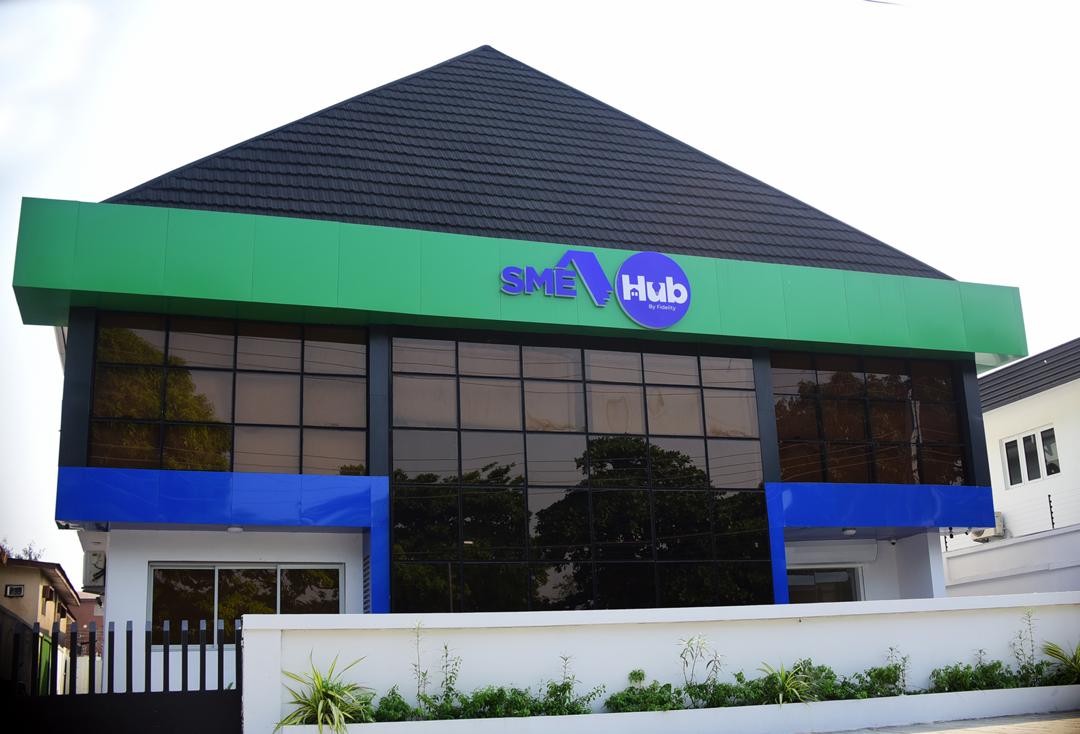
She disclosed that the Fidelity SME Empowerment Programme, launched in July 2025 at the Fidelity SME Hub in Gbagada, Lagos, provided 100 growth-ready SMEs with ERPRev-enabled point-of-sale systems and other business support tools at no cost to beneficiaries.
According to her, beneficiaries received business software, receipt printers, barcode scanners, inventory support, financial and bookkeeping training, branding assistance and six months of post-installation monitoring.
She said the programme was complemented by masterclasses and networking opportunities designed to improve the operational capacity of participating businesses.
Oluwadare further pointed to the Fidelity SME Hub, SME Masterclass Series, Fidelity SME Forum and Quarterly Business Forum as platforms through which entrepreneurs could access business knowledge, advisory support, networking opportunities and market information.
She said such initiatives could help businesses improve financial records, strengthen decision-making and become better prepared for formal financing.
On external recognition, Oluwadare said Fidelity Bank received the Development Bank of Nigeria Service Ambassadors Award in 2026 for its impact on MSMEs accessing credit for the first time.
She added that the recognition followed the bank’s receipt of the DBN Innovation Award in 2025 for its contribution to innovative financial products and services for MSMEs.
Oluwadare, however, acknowledged that financial institutions could not independently resolve the structural challenges confronting Nigerian businesses, stressing that reliable electricity, stable policies, efficient logistics and a supportive regulatory environment remained necessary for sustainable SME growth.
She said banks could nevertheless contribute by reducing transaction costs, financing productive activities, supporting digital transformation and connecting entrepreneurs with knowledge, networks and markets.
She urged entrepreneurs to assess banking relationships based not only on the availability of accounts or loans but also on their transaction volumes, financing needs, repayment capacity and wider operational requirements.
She said stronger and more resilient SMEs would ultimately contribute to job creation, innovation and broader economic development in Nigeria.
Discover more from SAFARI XPRESS NEWS
Subscribe to get the latest posts sent to your email.













Leave a Reply