

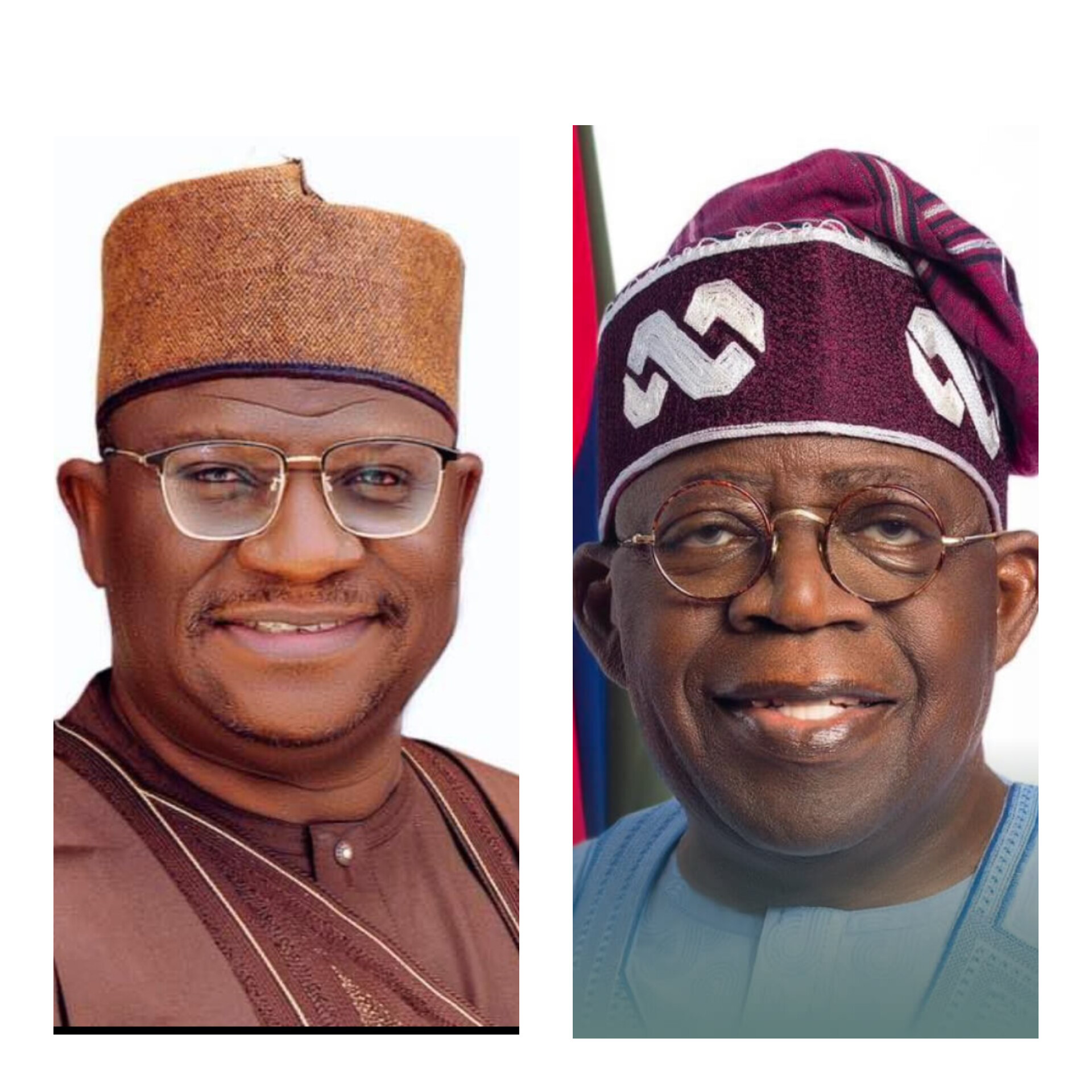
…Says it targets another 200,000 artisans for training
By Adebola Muili
The Director-General of the Industrial Training Fund (ITF), Dr Afiz Ogun, has defended President Bola Tinubu’s economic reforms, insisting that Nigerians will eventually benefit from the removal of petrol subsidy and the unification of the foreign exchange market despite the hardship associated with the policies.
Ogun made the position known on Thursday in Jos during activities marking the ITF’s 55th anniversary and his third year in office, urging Nigerians to look beyond the immediate economic difficulties and consider the long-term benefits of the reforms.
He argued that the previous foreign exchange regime created uncertainty for businesses and investors, while the petrol subsidy system had allegedly been exploited by a few beneficiaries to the detriment of the wider population.
“Some people hate the President today because of two things, and those two things are very good for Nigeria: exchange rate unification and fuel subsidy removal,” Ogun said.
Speaking before delivering his formal address at the Yakubu Gowon Auditorium and Gymnasium Complex, the ITF chief said reactions to discussions on the economy had prompted him to explain why he believed the policies were necessary.
He acknowledged the hardship caused by rising petrol prices but maintained that the reforms were intended to address longstanding economic problems and create a more stable environment for investment.
On foreign exchange, Ogun said the former system of fluctuating rates made it difficult for local and foreign investors to plan their businesses.
He likened the naira’s continued depreciation after the introduction of the reforms to an aircraft that could not stop immediately after landing, adding that the exchange rate was now stabilising.
The director-general also faulted the former petrol subsidy arrangement, alleging that it had enabled some beneficiaries to profit while Nigerians faced high fuel prices, scarcity and long queues at filling stations.
He further claimed that subsidised petrol had been diverted across Nigeria’s borders, enriching smugglers and other profiteers.
“Yes, we are suffering now, but let us endure. Those few who were benefiting are doing everything to bring the old system back, because there is wealth in poverty for them. Their wealth grows when poverty increases,” he said.
Ogun warned against supporting politicians promising to restore the subsidy, arguing that reversing the policy would undermine the gains he associated with the Tinubu administration.
He also cited what he described as a reduction in strikes by university lecturers as evidence of progress under the President’s policies.
On appointments, Ogun said his emergence as ITF director-general in 2023, despite having no prior personal relationship with Tinubu, demonstrated the President’s willingness to appoint people on the basis of competence.
He cited Tinubu’s tenure as governor of Lagos State as an example of leadership that accommodated people from different ethnic backgrounds, crediting the former governor with laying the foundation for the state’s economic growth and improvements in security.
The ITF chief urged Nigerians to assess the President’s performance without allowing ethnic or religious considerations to influence their judgment.
“Let us remove ethnicity. Let us remove where he comes from, whether he has a Christian or Muslim wife. Let us take Nigeria as Nigeria,” he said.
ITF targets 200,000 artisans for training
In his formal address, Ogun disclosed that the ITF planned to train another 200,000 artisans in 2026 under its Skill-Up Artisans (SUPA) programme, following the training of hundreds of thousands of artisans in three phases.
He said the programme was part of efforts to strengthen vocational skills, improve employability and prepare Nigerian artisans for opportunities within and outside the country.
According to him, more than 7,000 artisans had undertaken international certification examinations, while the fund had introduced three pathways to improve beneficiaries’ prospects after training.
The pathways are the Talent Export Pathway, Industry Placement Pathway and Business Incubation Pathway, which replaced the traditional starter-pack model.
Ogun also disclosed that the ITF had assessed 1,308 training centres, of which 776 were approved to expand access to vocational training that meets quality standards.
He listed the fund’s partners as Alberk QA Technic of Turkey, City & Guilds of the United Kingdom, ASQ Solutions UK, Japan’s Ministry of Economy, Trade and Industry and AOTS, as well as the Dangote Group, Bank of Industry, NELFUND and the National Board for Technical Education.
The director-general described Nigeria’s admission as the 83rd member of WorldSkills International and the establishment of the WorldSkills Academy in Abuja as significant steps towards strengthening the country’s global standing in skills development.
Established on October 8, 1971, under the administration of former Head of State, General Yakubu Gowon, the ITF was created to address manpower shortages and develop the skills required to support Nigeria’s economic growth.
Ogun said his administration had also prioritised staff welfare, digital transformation and infrastructure development since he assumed office on October 17, 2023.
He listed staff promotions, capacity building, health insurance, pension programmes, staff loans and the renovation of the ITF headquarters among the measures introduced.
He added that the fund had recertified its ISO 9001:2015 Quality Management System, adopted the ISO 17024 framework and digitised key operations, including the Students Industrial Work Experience Scheme, reimbursement processing and SUPA administration.
Among the completed projects, Ogun listed the corps members’ lodge, Modern Skills Academy in Jos, staff quarters in Port Harcourt, Model Skills Training Centre in Enugu, renovation of the Akure Area Office and solar installations across several facilities.
He said work was ongoing on a Mechatronics and ICT Training Centre in Ikare-Akoko, while new area offices were being developed in Lafia and Bauchi. Renovation projects were also continuing in Benin, Calabar, Enugu, Apapa and Ilorin.
Ogun said his ambition was to position the ITF as a leading learning and development agency capable of competing with similar institutions worldwide, urging staff to uphold integrity, professionalism, teamwork and commitment in carrying out their responsibilities.
Also speaking at the event, the Managing Director and Chief Executive Officer of the Oil and Gas Free Zone Authority, Bamanga Usman Jada, congratulated the ITF on its 55th anniversary and commended the standard of facilities at the agency’s Centre of Excellence in Jos.
The anniversary celebration featured cultural performances by students of the ITF Model School, interfaith prayers and a novelty football match between management and junior staff. Activities scheduled for Friday included a staff fitness walk, visits to an orphanage and a correctional facility, and indoor board games.
Discover more from SAFARI XPRESS NEWS
Subscribe to get the latest posts sent to your email.





Leave a Reply