

By Adebola Muili
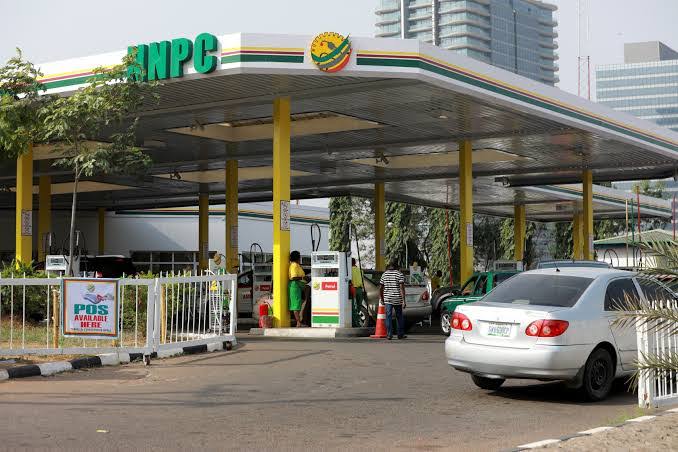
The Nigerian National Petroleum Company (NNPC) Limited has agreed to forgo its retail profit margin on petrol for 30 days as part of Federal Government measures to cushion the impact of rising global oil prices on Nigerians.
The decision, backed by President Bola Tinubu, is intended to ease the burden of high fuel prices on households, particularly commercial transport operators, whose operating costs contribute to rising transportation fares and the cost of goods and services.
The Finance Minister and Coordinating Minister of the Economy, Taiwo Oyedele, announced the measure on Thursday alongside other interventions aimed at moderating petrol price fluctuations, reducing logistics costs and protecting vulnerable Nigerians from the effects of global oil market volatility.

Under the arrangement, NNPC Retail will sell petrol at its landing cost without adding its retail profit margin for the next 30 days. According to the Presidency, if the company’s landing cost is ₦1,300 per litre, it will sell at the same price.
Oyedele expressed hope that other fuel marketers would follow NNPC’s example, noting that the recent surge in crude oil and petrol prices was not expected to last long.
He, however, cautioned against interpreting the arrangement as a return to petrol subsidy, which the Tinubu administration abolished on May 29, 2023.
Another major measure announced by the government is a proposed ceiling of ₦1,350 per litre on the ex-gantry or landing cost of petrol, which is still being negotiated with relevant operators.
Under the proposed arrangement, refiners and importers would bear costs exceeding the ceiling and recover the shortfall later when crude oil prices or the exchange rate become more favourable. The government said the mechanism was intended to moderate price fluctuations without permanently suppressing market prices.
Oyedele said the proposal was neither a subsidy nor price control but a mechanism to smooth out price movements over time.
“This is neither a subsidy nor a price control: it is designed to smooth prices over time rather than suppressing them,” he said.
He explained that maintaining relatively stable prices would be preferable to sharp increases followed by reductions, particularly because transport fares often rise quickly when fuel prices increase but rarely fall at the same pace.
According to him, the proposed ceiling would be reviewed monthly and adjusted according to prevailing costs, with the figures published to ensure transparency.
The Federal Government is also pursuing forward sales of crude oil to domestic refineries. The measure, alongside increased production and the release of previously committed crude supplies, is expected to help shield domestic petrol prices from international market volatility.
Other interventions include increased funding for cash transfers to vulnerable households, subsidised credit for small businesses and consumers, and an accelerated rollout of compressed natural gas (CNG) as a cheaper alternative to petrol.
The government said CNG, estimated to be 60 to 70 per cent cheaper than petrol, would be deployed in collaboration with state governments, with transport operators expected to pass the resulting savings on to passengers through lower fares.
It also plans to consider an excess-profit tax on operators found to be taking undue advantage of consumers across the energy value chain. Proceeds from such taxes would be used exclusively to cushion the impact of high fuel prices through transport support or vouchers for urban minimum-wage earners.
The Federal Government further plans to work with the National Assembly to consider additional tax relief for low-income earners under the 2027 Finance Bill.
To address costs contributing to high fares and the prices of goods, the government said it was working with state governments and security agencies to curb the collection of road taxes and levies that inflate transportation and logistics expenses under the 2025 tax reform laws.
It also announced plans to reduce regulatory costs that contribute to the cost of doing business and, indirectly, the prices of goods and services.
As part of its longer-term response to energy supply disruptions, the Federal Government is investing in a National Strategic Fuel Reserve to strengthen the country’s energy security.
Under the proposed framework, refined petroleum products would be released into the market under clear, published rules whenever global disruptions or hoarding threaten supply and price stability.
The government said the initiative would help prevent artificial scarcity, discourage market manipulation and reduce price volatility without reintroducing fuel subsidy or fixing prices.
The administration is also looking to improve traffic flow, particularly in major urban centres, to reduce fuel consumption. The use of address codes recently introduced by the Nigerian Postal Service (NIPOST) is expected to improve logistics efficiency and reduce delivery costs.
In a statement issued on Thursday, the Special Adviser to the President on Information and Strategy, Bayo Onanuga, acknowledged the hardship Nigerians were experiencing because of high fuel prices but maintained that restoring a blanket subsidy would undermine the country’s economic reforms.
“Removing the fuel subsidy came at a price. But the alternative has been tried. Nigeria has already lived through that cycle: scarcity, smuggling, a collapsing currency and a fiscal crisis,” the statement quoted the Presidency as saying.
The Presidency added that the government could not afford to return to that situation in response to what it described as a temporary disruption, particularly as the results of its economic reforms were beginning to emerge.
It said the objective was not to reverse the subsidy removal but to ensure that the benefits of the reforms reached more Nigerians quickly and tangibly.
The Federal Government also disclosed that it was working on a comprehensive package of fiscal measures aimed at sustainably reducing inflation to single digits in the near term.
Discover more from SAFARI XPRESS NEWS
Subscribe to get the latest posts sent to your email.












Leave a Reply