

From an alleged fake NAFDAC number to claims of underage workers, the Badagry operation raises questions about packaged drinks and informal food production.
By Adebola Muili
On a shop shelf, a brightly packaged fruit drink can look like any other beverage competing for consumers’ attention.
The label may appear convincing, the brand familiar and a regulatory number prominently displayed. For many buyers, that is enough to assume the product has passed the required checks.
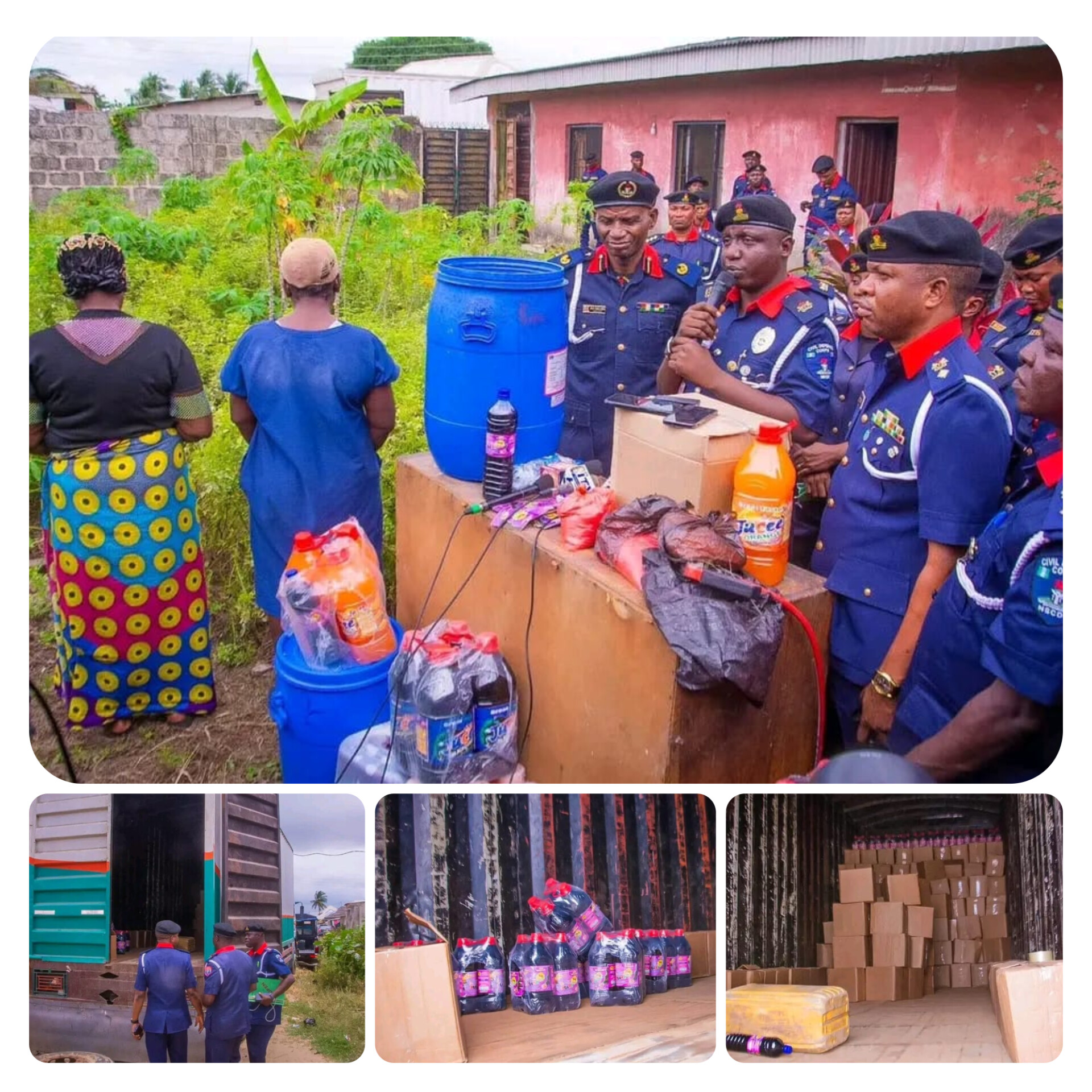
But at a facility in Aradagun, Badagry, Lagos State, the Nigeria Security and Civil Defence Corps (NSCDC) said it uncovered a production operation that has raised questions about how some packaged drinks enter the Nigerian market.
The discovery followed about five days of surveillance before NSCDC operatives moved into the facility on Talabi Onilegbale Street, Olorunda Local Council Development Area.
The operation, conducted between September 19 and 20, 2026, led to the arrest of two women, aged 48 and 50, who the Corps accused of producing and distributing an allegedly adulterated fruit drink known as “Barkas Juice.”
The operation was carried out with the support of a Nigerian Army formation in the area, according to the NSCDC.
But the arrests were only part of what investigators said they found.
Cartons of the suspected drink, production machinery, chemicals, drums, a gas cylinder and a truck reportedly loaded with the products were recovered from the premises.
The Corps also said it found a well and an industrial storage tank at the facility.
What was in the drink?
According to the NSCDC, preliminary findings indicated that the drink was allegedly produced with water, synthetic flavourings, industrial sweeteners, artificial colourants, preservatives and other additives, rather than real fruit.
The claim remains subject to further investigation and laboratory or regulatory verification.
The allegation nevertheless raises an important consumer-protection question: what happens when a packaged drink reaches the market before its contents and manufacturing process have been properly verified?
The NAFDAC number
The regulatory status of the product is another major issue.
The NSCDC alleged that the drink carried a purported NAFDAC registration number that was not genuine.
The number reportedly displayed on the product was 01-2166L.
The Corps said a check of the NAFDAC database did not establish a valid record for the product.
For consumers, a registration number printed on a bottle is often an important sign of legitimacy. If the allegation is established, however, it would mean that the problem went beyond the contents of the drink to the information presented to consumers.
The investigation will therefore have to establish whether the product was registered, whether its contents met regulatory requirements and how long the alleged operation had been running.
From Badagry to other markets
The NSCDC said the alleged distribution network extended beyond Badagry.
According to the Corps, the products were supplied to markets in Lagos, Benin City and other parts of the country.
That claim could significantly widen the investigation.
Authorities may now have to determine where the products were taken, who received them and whether other individuals or businesses were involved in their distribution.
The answers could also determine whether the closure of the Badagry facility has effectively stopped the alleged supply chain or merely removed one production point.
Alleged use of minors
The operation also uncovered another concern.
The NSCDC reportedly said boys and girls aged between 15 and 16 were working at the facility and were rescued during the operation.
If confirmed, the allegation would introduce a child-protection dimension to a case already involving food regulation and alleged unlawful production.
Questions about how the minors came to be at the facility, the work they performed and how long they had been there will form part of the issues requiring clarification.
A family business under scrutiny
One of the arrested women reportedly offered a different perspective.
She told investigators, according to reports, that the business had been established by her grandmother and had operated for almost two decades.
She reportedly said the premises had previously been used for water production before the business moved into Barkas juice production.
She also claimed that the factory did not produce the drink daily, but operated periodically, producing three or four times a year for distribution outside Lagos.
Her account does not resolve the regulatory questions raised by the NSCDC. But it adds a human dimension to the case.
What one side describes as a longstanding family business is now being examined by authorities over allegations concerning product registration, manufacturing practices and distribution.
What happens next?
Lagos State NSCDC Commandant, Adedotun Keshinro, ordered the immediate closure of the facility and directed further investigation.
The command said it would work with NAFDAC and other relevant agencies to establish the facts and determine the appropriate legal and regulatory action.
That collaboration will be important.
While the NSCDC can secure the premises, arrest suspects and recover materials, questions about the composition and regulatory status of a food product require appropriate laboratory and regulatory processes.
Until those processes are completed, the allegations against the operators remain allegations.
But the Badagry operation has already exposed a broader concern: how allegedly unregulated food products can move from informal production sites into markets across state boundaries.
For consumers, the incident is a reminder that attractive packaging and a printed registration number should not automatically be treated as proof of regulatory approval.
For regulators, the challenge goes beyond shutting one factory.
It is to trace the products, establish the facts, identify any wider network and ensure that food and beverage products reaching consumers meet the required standards.
The Badagry factory has been shut.
The investigation into what happened inside it and where its products may have gone continues.
Discover more from SAFARI XPRESS NEWS
Subscribe to get the latest posts sent to your email.








Leave a Reply