

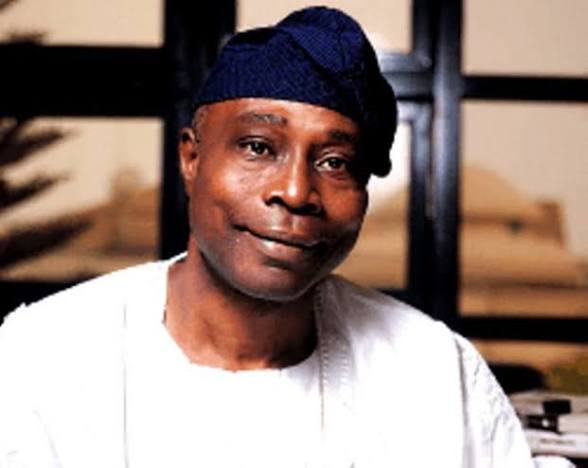
After two governorship battles, former APC aspirant is absent from Tinubu’s cabinet and 2027 campaign structure
By Adebola Muili
There was a time when the mention of Dr. Segun Abraham in Ondo State politics immediately evoked another name — Bola Ahmed Tinubu.
Abraham was not merely regarded as another aspirant in the crowded political field. He was widely identified with Tinubu’s political camp and, at the height of their alliance, was considered the former Lagos governor’s preferred candidate for the Ondo State governorship.
That perception reached its peak during the 2016 governorship contest of the All Progressives Congress (APC), when Abraham came within a whisker of securing the party’s ticket.

But almost a decade after that bruising contest, and following another unsuccessful attempt in 2020, Abraham’s political visibility has changed considerably.
Tinubu is now President of Nigeria and preparing for another presidential contest in 2027. Yet Abraham is neither a member of the President’s cabinet nor among the diplomats appointed by the administration.
More strikingly, as the APC’s machinery for the 2027 presidential election takes shape, Abraham is not among the prominent names in the presidential campaign council recently unveiled by the party.
For a politician once regarded as one of Tinubu’s strongest political allies in Ondo, the question is difficult to avoid: where is Segun Abraham politically today?
Abraham’s political rise within the APC coincided with the party’s consolidation of opposition forces ahead of the 2015 general elections. But it was the 2016 Ondo governorship contest that firmly placed him at the centre of the state’s political calculations.
At the APC primary held in September 2016, Rotimi Akeredolu defeated Abraham by just 669 votes to 635.
The narrow margin was significant.
Abraham had come within 34 votes of defeating the man who would eventually become governor. The outcome also triggered an internal crisis within the APC, with allegations and counter-allegations surrounding the conduct of the primary.
More importantly, the contest was widely interpreted as a battle between competing political interests, with Abraham described in contemporary reports as Tinubu’s preferred candidate. Premium Times, reporting the result at the time, described Akeredolu as having defeated “Tinubu’s candidate” at the APC primary.
The defeat did not end Abraham’s political ambitions.
He challenged the outcome and remained within the political space, while Akeredolu proceeded to win the governorship election.
For Abraham, however, the 2016 primary established both his strength and the limits of his political influence.
He had the backing of a powerful political godfather, a sizeable political structure and enough support to come remarkably close to winning the ticket.
But he still lost.
Four years later, Abraham returned for another attempt.

The 2020 APC governorship primary again brought his name into direct competition with Akeredolu. Once again, the contest was accompanied by intense political manoeuvring, disagreements over the party’s internal processes and questions about who enjoyed the backing of the party’s influential figures.
But this time, the political equation surrounding Tinubu and Akeredolu had changed.
Contemporary reports noted that while Abraham was still widely associated with Tinubu, the former Lagos governor’s camp was no longer as clearly opposed to Akeredolu as it had been in 2016. One report described Tinubu’s camp as being in shock over Abraham’s position and reported that the Presidency favoured Akeredolu.
Akeredolu ultimately retained the APC ticket.
Abraham’s second attempt had therefore ended in the same place as the first: outside the governorship race.
The significance of those two defeats goes beyond the fact that he failed to become governor.
They also gradually changed the political conversation around him.
In 2016, Abraham was at the centre of the battle over who would control the APC governorship ticket.
By 2020, he was again a major contender, but the political environment had shifted.
And after that second defeat, he never again occupied the same frontline position in Ondo State politics.
His association with Tinubu, however, did not disappear.
Ahead of the 2023 presidential election, Abraham remained involved in the Tinubu political project and was publicly associated with efforts to mobilise support for the APC presidential candidate.

That relationship became particularly significant when Tinubu eventually won the presidential election.
For political watchers who had followed the Abraham-Tinubu relationship for years, the development naturally raised expectations.
Tinubu was no longer merely a former party leader or political godfather operating outside government. He was now President of Nigeria.
The formation of his administration therefore presented a new political chapter.
But when the President constituted his Federal Executive Council in 2023, Abraham was not among the ministers.
That omission was not, in itself, unusual. Presidential appointments are influenced by numerous considerations, including federal character, political balancing, expertise, loyalty, representation and the President’s own priorities.
The contrast became even more striking when the administration’s ministerial appointments were eventually made. Rather than Abraham, another prominent politician from his federal constituency, Olubunmi Tunji-Ojo, popularly known as BTO, emerged as one of the beneficiaries of Tinubu’s cabinet. Tunji-Ojo, who had just secured a second term in the House of Representatives to represent the Akoko North East/Akoko North West Federal Constituency, was appointed Minister of Interior and subsequently resigned his legislative seat to take up the federal appointment.
The development was politically significant. Abraham had spent years being identified with Tinubu’s political camp in Ondo, including his two unsuccessful attempts to secure the APC governorship ticket, yet the same federal constituency produced a politician who, within months of securing re-election to the House, moved directly into the President’s cabinet.
Tunji-Ojo’s elevation also triggered a fresh political contest in the constituency. Following his resignation, the House seat became vacant and the Independent National Electoral Commission conducted a by-election on February 3, 2024. APC candidate Ife Ehindero won the election with 35,504 votes, defeating PDP candidate Olalekan Bada, who polled 15,328 votes.
The episode added another dimension to the question of Abraham’s political standing. While a younger political figure from his constituency was moving from the House of Representatives into the President’s cabinet, Abraham — despite his long-standing association with Tinubu — remained outside the federal appointments that could have given his political career a new national platform.
In Abraham’s case, however, the absence attracted particular attention because of the long-standing perception of his closeness to Tinubu.

The same pattern later appeared in the diplomatic arena.
As the Tinubu administration began making ambassadorial appointments, Abraham’s name again did not emerge as one of those selected.
There has been no public statement from Tinubu saying that Abraham was deliberately excluded from either the cabinet or the diplomatic service. Abraham, for his part, has not publicly declared that he fell out with the President.
It would therefore be wrong to equate the absence of an appointment with evidence of a political quarrel.
But the contrast remains striking.
The man once identified as Tinubu’s preferred candidate in a major governorship contest had now spent years without holding an elective position or a prominent federal appointment.

The transformation of Ondo politics further complicated the picture.
Akeredolu, the man who twice defeated Abraham in the APC contest, became governor and remained one of the state’s most influential political figures until his death in December 2023.
His successor, Lucky Aiyedatiwa, subsequently emerged as the APC candidate for the 2024 governorship election and won the poll.
By then, Abraham was no longer a central figure in the contest for Alagbaka.
That was perhaps the clearest indication that the political landscape had moved on.
The structures, personalities and alliances that had made the Abraham-Akeredolu contest one of the defining stories of Ondo APC politics had changed.
New political actors had emerged, while old alliances had either evolved or lost their former influence.
Yet the biggest question surrounding Abraham may now be coming from Abuja rather than Akure.
Tinubu is seeking another term in office.
The APC has activated its presidential campaign machinery, with former Zamfara State governor Abdul’aziz Yari appointed Director-General of the 2027 Presidential Campaign Council and other senior party figures assigned key roles.
But Abraham is not among the prominent names announced in the structure.

For a politician whose name was once almost synonymous with Tinubu’s political influence in Ondo, his absence is difficult to ignore.
It raises several questions.
Has Abraham’s political influence declined because of his two failed attempts to secure the Ondo governorship ticket?
Did the changing relationship between Tinubu and the Ondo political establishment alter his place within the President’s political calculations?
Has the emergence of new actors around the President reduced the relevance of older political alliances?
Or has Abraham simply chosen a quieter path, preferring influence behind the scenes to the visibility that once accompanied his governorship ambitions?
There is no conclusive public evidence to answer these questions.
What is evident, however, is that Abraham’s political journey has moved a long distance from the period when he was regarded as one of the strongest political allies of Tinubu in Ondo.

His story is therefore not simply one of a politician who lost two governorship contests.
It is the story of a man who came remarkably close to power, remained within the political family of one of Nigeria’s most powerful politicians, participated in the struggle that helped shape the APC in Ondo, and then watched the political landscape change around him.
The irony is that the man who once needed Tinubu’s political influence to strengthen his bid for the Ondo governorship is now watching Tinubu occupy the highest elective office in the country without himself occupying a corresponding position within the administration.
And as Tinubu prepares for 2027, Abraham’s absence from the emerging campaign structure adds another layer to the mystery.
It may not mean that the relationship between the two men has ended.
It may not even mean that Abraham has lost all political influence.
But it does suggest that whatever role he once played at the centre of Tinubu’s political calculations in Ondo is no longer as visible as it was.
For now, the former governorship aspirant remains a familiar name in the political history of Ondo APC, but an increasingly quiet presence in its current power equation.
And that leaves one question hanging over his next political move: is Segun Abraham merely lying low, waiting for another opportunity, or has one of Tinubu’s once-formidable allies finally moved beyond the frontline of Nigerian politics?
Discover more from SAFARI XPRESS NEWS
Subscribe to get the latest posts sent to your email.






Leave a Reply