

By Adebola Muili
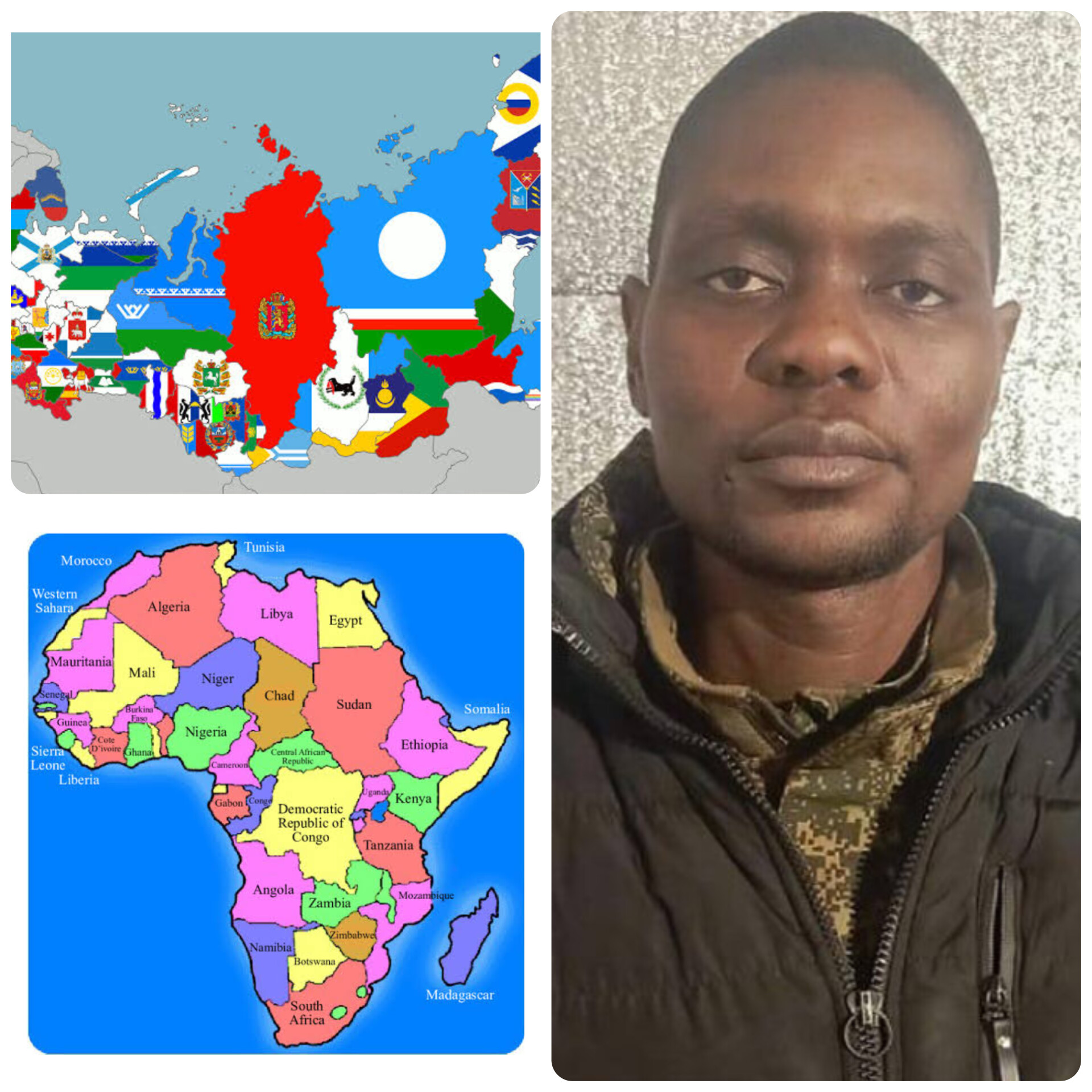
For 33-year-old Nigerian Olabode Victor Ayebusiwa, the promise of an opportunity abroad ended in death on a battlefield thousands of kilometres from home.
Ayebusiwa, an indigene of Ilutitun in Ondo State, was reportedly killed while fighting for Russian forces in Ukraine, after allegedly travelling to Russia in search of an overseas opportunity. His death has now become part of a much bigger and increasingly disturbing story — the growing involvement of African nationals in Russia’s war against Ukraine.
What makes the development particularly troubling is the allegation that some Africans are not initially recruited as soldiers. Instead, they are reportedly attracted by promises of employment, education, security work, financial rewards, residency or a better life abroad, only to discover later that the opportunities presented to them may lead directly or indirectly into Russia’s war effort.
And as fresh investigations emerge, the recruitment concerns appear to be spreading beyond young men being sent to the battlefield.
In Nigeria, the Federal Government has already warned citizens against illegal recruitment into foreign armed conflicts, following reports that Nigerians were being lured with promises of lucrative employment, security jobs, educational opportunities and migration incentives.
The government said some victims were allegedly coerced into signing military contracts after travelling through apparently legitimate civilian channels, while others reportedly had their travel documents confiscated.
The warning underscores a growing concern among migration experts and anti-trafficking organisations that economic hardship and the desperation to leave Africa are creating opportunities for international recruitment networks to prey on vulnerable young people.
From Opportunity to the Battlefield
The case of Ayebusiwa provides a human face to the growing concern.

Ukrainian Defence Intelligence said he had signed a military contract with Russia in February 2026 before being deployed to the Kharkiv region, where he was killed.
Ukrainian authorities alleged that his recruitment followed a pattern in which foreign nationals were attracted by promises of easy money and opportunities in Russia before being drawn into military service.
The circumstances surrounding individual recruits, however, vary considerably.
Some foreign nationals appear to have knowingly signed military contracts with Russia, while others have told journalists, investigators or relatives that they were deceived about the nature of the work they were travelling to undertake.
That distinction is important.
Not every African fighting for Russia can automatically be described as a trafficking victim, nor can every foreign recruit be classified as a mercenary. But investigators say there is increasing evidence that some recruitment networks deliberately exploit people who are economically vulnerable and eager to migrate.
It is this alleged exploitation that has attracted growing international scrutiny.
The Numbers Behind the Recruitment
Ukraine’s Coordination Headquarters said in March that it had identified 27,407 foreign nationals from 135 countries fighting alongside Russian forces.
The figure included nationals from African countries as well as countries in the Middle East, Central Asia and other regions.
The figure has not been independently verified as a complete count, and it should not be interpreted as meaning that all those individuals were deceived or trafficked.
Nevertheless, the scale of foreign participation has alarmed human rights and migration organisations.
A joint investigation by the International Federation for Human Rights, Truth Hounds and the Kazakhstan International Bureau for Human Rights and Rule of Law alleged that Russia had recruited approximately 27,000 foreign nationals from about 130 countries since 2022.

The organisations said their investigation, which included interviews with former Russian military personnel and prisoners of war, identified recruitment practices that in some cases allegedly involved deception, coercion and exploitation.
According to the investigators, some foreigners were promised employment, education or legal residency before eventually being channelled into military service.
For Russia, foreign recruitment offers an additional source of manpower at a time when the war has created enormous demand for soldiers.
Ukrainian intelligence has also claimed that Moscow planned to recruit thousands of foreigners in 2026, although such assessments remain claims from a party to the conflict and have not been independently confirmed.
Africa’s Economic Vulnerability
Africa’s demographic profile makes the continent particularly vulnerable to such recruitment.
Millions of young Africans enter the labour market every year in economies that struggle to create enough formal employment. In Nigeria, unemployment, inflation, insecurity and the high cost of living have intensified the desire among many young people to seek opportunities abroad.
The attraction of migration is therefore not difficult to understand.
For many families, an overseas job represents more than employment. It can mean a house, school fees for younger siblings, medical expenses and a route out of poverty.
Recruiters understand this desperation.
Investigations have found advertisements on social media and messaging platforms offering jobs in Russia and other countries, sometimes promising salaries far above what unemployed young people could reasonably expect to earn at home.
Security positions, warehouse work, factory jobs, scholarships and relocation opportunities can appear legitimate to applicants who have little experience navigating international recruitment systems.
But investigators say some arrangements can conceal a very different reality.

When the Job Becomes Military Service
One of the most disturbing features of the alleged recruitment system is the reported transformation of civilian employment arrangements into military involvement.
Some recruits have reportedly travelled to Russia on ordinary visas before being introduced to military contracts.
Others allegedly discovered only after arriving that the work they had been promised was connected to Russia’s war effort.
In some cases, investigators have alleged that recruits were subjected to military training before being deployed.
The FIDH-led investigation warned that such practices could, depending on the circumstances of individual cases, fall within international definitions of human trafficking.
Human trafficking does not require that a victim necessarily be physically kidnapped. Deception, exploitation and abuse of vulnerability can also form part of trafficking patterns.
That is why migration experts say the circumstances surrounding recruitment are as important as the final destination of the recruits.
The Women of Alabuga
The recruitment controversy has also acquired a new dimension involving young African women.
In August 2026, ActionAid Nigeria called for an investigation into the alleged exploitation of Nigerian women recruited under Russia’s Alabuga Start Programme.
The programme was promoted as offering young women opportunities involving education, professional development and employment.
However, ActionAid raised concerns over reports that some Nigerian recruits may have ended up working under unsafe conditions and in activities connected with the production of military drones.

If substantiated, the allegations would demonstrate that Russia’s alleged recruitment ecosystem extends beyond direct enlistment into the armed forces.
It would also expose a more complex pathway in which young Africans could potentially contribute to Russia’s war effort without initially being told that military production is part of their employment.
For young women who travel thousands of kilometres believing they are pursuing education or a career, the consequences could be devastating.
Russian Houses and the Recruitment Question
Another emerging concern involves Russia’s network of cultural and educational centres in Africa, sometimes known as “Russian Houses”.
Investigations have raised questions about whether some programmes promoting educational and employment opportunities in Russia could also provide channels through which young Africans become exposed to recruitment networks.
The allegations do not mean that every Russian cultural or educational programme is a recruitment operation.
But investigators say the broader concern is how Russia’s attractiveness as a destination for education, employment and migration can potentially be exploited by individuals seeking recruits for the country’s war economy.
That makes verification critical.
Young Africans considering overseas opportunities need to know precisely who is recruiting them, what company they will work for, where they will live, what visa they are travelling on, whether they will be required to sign a military contract and whether their passports will remain in their possession.
Britain’s Sanctions
International authorities have also begun targeting individuals allegedly involved in the recruitment network.
On May 5, 2026, the United Kingdom sanctioned Russian national Polina Alexandrovna Azarnykh, accusing her of facilitating the movement of foreign nationals through Russia for deployment in the war.
British authorities said the countries involved included Nigeria, Egypt, Iraq, Morocco, Syria, Yemen and Côte d’Ivoire.
The sanctions included an asset freeze and travel restrictions.
The action followed investigations alleging that Azarnykh used online platforms to attract foreign nationals with offers linked to employment, financial incentives and residency opportunities.
The British action is significant because it moves the issue beyond media allegations and into formal government sanctions.

It also reinforces concerns that recruitment may involve organised intermediaries rather than isolated individuals acting independently.
Kenya’s Warning
Nigeria is not alone in confronting the problem.
Kenyan authorities have also investigated the recruitment of their citizens into Russia’s war effort.
A Kenyan intelligence report presented to parliament reportedly found that more than 1,000 Kenyans had been recruited to fight for Russia.
The alleged targets included former soldiers, former police officers and unemployed people who were reportedly offered attractive salaries and bonuses.
Some were also said to have travelled using tourist visas.
The Kenyan case illustrates how recruiters can exploit both military experience and unemployment.
For a former soldier struggling to find work, an offer of a well-paid security position abroad may appear credible.
For an unemployed young man with no military experience, the promise of a high-paying overseas job can be equally difficult to resist.
Russia Denies Deceptive Recruitment
Russia has rejected allegations that its government operates a fraudulent recruitment programme targeting Nigerians.
Russian officials have maintained that foreigners serving with Russian forces do so voluntarily under legal military contracts and have denied that Moscow operates a state-sponsored scheme to deceive Nigerians into joining the war.
That position cannot simply be dismissed.
Some foreign nationals have knowingly joined Russia’s armed forces, and there are foreigners who voluntarily entered into military contracts.
The central question, however, is whether every person who eventually signs such a contract fully understood what they were signing up for.
That is where the allegations of deception and exploitation become important.
The Nigerian Government’s Dilemma
For Nigeria, the problem presents both a diplomatic and a humanitarian challenge.
The Federal Government has repeatedly warned Nigerians against participating in foreign armed conflicts and has urged citizens to verify overseas employment opportunities before travelling.
But warnings alone may not be enough.
Migration experts argue that Nigeria needs stronger regulation of international recruitment agencies, tighter monitoring of overseas employment advertisements and greater cooperation with destination countries.
Embassies and consular missions may also need stronger mechanisms for identifying Nigerian nationals who become stranded, detained, injured or forced into military service abroad.
Families, meanwhile, need greater access to information.
Too often, relatives may know only that a son, daughter or sibling has travelled abroad for work. They may not know the company involved, the actual location of employment or the legal documents signed by the traveller.
By the time communication stops, it may already be too late.
The Human Cost

Behind the statistics are families.
For Ayebusiwa’s relatives, the arguments over Russia’s military strategy, Ukraine’s resistance and international geopolitics cannot erase the most immediate reality: a young Nigerian left home looking for an opportunity and ended up dead in a war that was never his.
His story is also a warning to other young Africans.
The dream of leaving Africa is not itself the problem.
Migration has transformed millions of lives and provided families with opportunities that may not have existed at home.
The danger begins when desperation removes the ability to question an offer.
A job that requires secrecy, a recruiter who refuses to provide a verifiable company address, a visa that does not match the promised employment, pressure to surrender a passport, unexplained military terminology or demands to sign documents that the applicant does not understand should all be treated as major warning signs.
A War Beyond the Battlefield
The Russia-Ukraine conflict is increasingly being fought not only with weapons and soldiers but also through a global search for manpower.
For Russia, foreign recruitment can help address battlefield demands.
For recruiters, vulnerable migrants can represent a lucrative pool of potential recruits.
For African youths, however, the consequences can be catastrophic.
The challenge for African governments is therefore no longer simply to tell citizens not to join foreign wars.
They must also address the conditions that make deceptive offers attractive in the first place.
Until young people have better access to decent employment, reliable migration information and legitimate international opportunities, the promises of recruiters will continue to compete successfully with the realities at home.
And somewhere between a social media advertisement promising a better life and a battlefield thousands of kilometres away, another young African could once again discover that the “job” he or she was promised was never really a job at all.
Discover more from SAFARI XPRESS NEWS
Subscribe to get the latest posts sent to your email.










Leave a Reply