

By Adebola Muili
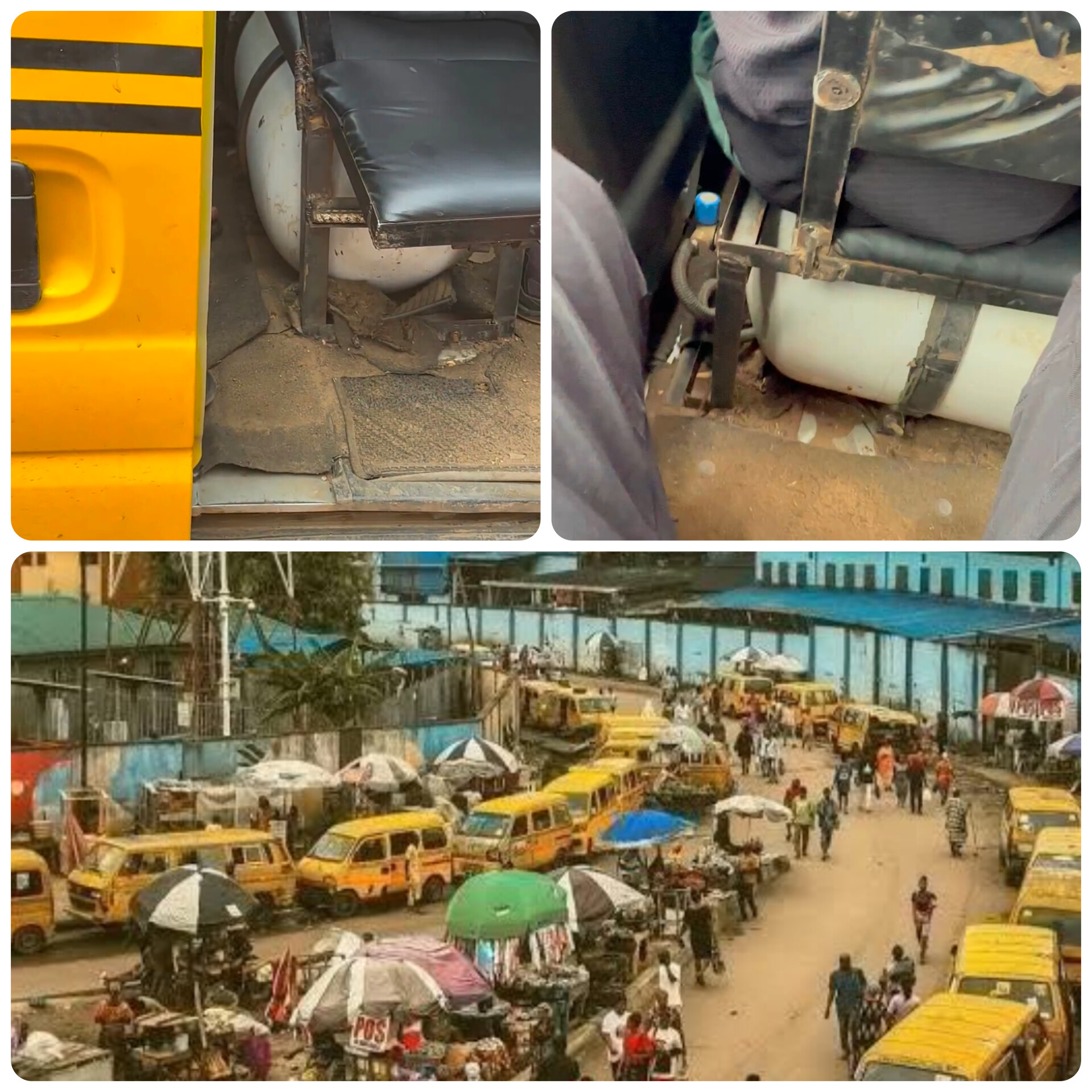
Despite the growing adoption of Compressed Natural Gas (CNG) by commercial vehicles in Lagos and repeated government assurances that the cheaper fuel would translate into lower transportation costs, commuters across the state continue to pay the same fares on many CNG-powered buses as they do on petrol-driven vehicles.
A Lagos commuter who boarded a CNG-powered danfo recently told the Hope Newspaper that he was charged exactly the same fare he would have paid on a petrol-powered bus, raising fresh questions about whether the financial benefits of the Federal Government’s CNG initiative are reaching the millions of residents who depend on commercial transportation daily.
The development comes at a time when the Federal Government and state governments are intensifying efforts to make CNG a cheaper alternative to petrol. The Nigeria Governors’ Forum (NGF), at its meeting in August 2026, backed a proposed National Affordable CNG Transit Programme (NACTP), designed to translate the lower operating cost of CNG into reduced transport fares for commuters.
The proposed programme envisages state support for vehicle conversions, CNG fleets and supporting infrastructure, alongside commitments by participating transport operators to reduce fares.
The development has become particularly significant in Lagos, where transport costs remain a major concern for residents. Petrol prices in the state have continued to fluctuate, with the pump price at major outlets recently rising above ₦1,300 per litre, while CNG remains significantly cheaper on an energy-equivalent basis.
The Presidential CNG Initiative has maintained that CNG can provide substantial savings in fuel costs for motorists, with the actual savings depending on vehicle efficiency, route, driving conditions and the prevailing prices of both fuels.
The economic argument behind the transition is straightforward: commercial operators who cover long distances daily should be able to spend less on fuel when operating on CNG than they would on petrol.

Yet, for many commuters, that expected benefit remains largely invisible.
The issue, however, is not entirely straightforward, as drivers say the reduction in fuel expenditure does not automatically translate into an immediate reduction in fares.
A National Union of Road Transport Workers (NURTW) executive at Iyana-Ipaja, Ismail Idowu Akinwande, said the benefits of CNG adoption were yet to be uniform among commercial operators, noting that the number of CNG-powered vehicles remained relatively small while drivers continued to contend with other operational expenses.
Another CNG danfo driver, Alamu Rafiu, said the economics of operating on CNG had become more complicated with changes in the price and availability of the gas. According to him, the cost of converting a vehicle, coupled with maintenance and other daily expenses, also had to be considered when determining fares.
For commuters, however, the explanation offers little comfort.
A passenger, Taophiq Oluwafemi, said commuters were primarily concerned with the amount they paid for each journey, regardless of whether the vehicle was powered by petrol or CNG. He questioned why passengers should continue paying existing fares when the transition to CNG was being promoted as a way of making transportation cheaper.
The divergent positions expose one of the major challenges facing the CNG transition: ensuring that the savings generated by cheaper fuel are not absorbed entirely by operators but are reflected in the cost borne by passengers.
The Federal Government has repeatedly linked CNG adoption with the reduction of transportation costs. The proposed National Affordable CNG Transit Programme is expected to deepen the deployment of CNG-powered buses and create a framework through which the savings from cheaper fuel can be passed on to commuters.
The government and governors have also set October 1, 2026 as a target for implementing measures aimed at reducing transportation costs nationwide.
For Lagos, the issue is particularly important because of the state’s dependence on commercial buses, popularly known as danfos, for daily movement across the metropolis.

Lagos is simultaneously pursuing reforms aimed at bringing informal commercial bus operators into a more structured and regulated system through the Bus Industry Transition Programme (BITP).
Under the proposed arrangement, the Lagos Metropolitan Area Transport Authority (LAMATA) would retain regulatory oversight, while transport operators and unions would be organised under a more formal framework.
The reform is expected to improve regulation of routes, fares, payment systems and general operations. But formalising the danfo system alone may not guarantee cheaper transportation unless fare-setting takes into account the lower fuel costs associated with CNG.
While the number of CNG-powered commercial buses on Lagos roads is increasing, there is no publicly available official figure establishing the proportion of the state’s danfo fleet that has been converted to CNG.
Available government figures largely cover vehicles converted nationwide and specific CNG bus programmes, making it difficult to independently verify claims about the percentage of Lagos danfos already running on CNG.
Lagos, however, is making a major investment in CNG-powered public transportation, including plans involving thousands of CNG buses under government-backed initiatives.
Those plans should not be interpreted as evidence that an equivalent number of existing danfos have been converted, as government-backed CNG fleets and privately operated danfos are separate categories.
The central issue, therefore, is not whether CNG can reduce the cost of running commercial vehicles.

It is whether those savings are reaching the people the policy was designed to help.
For operators, the calculation includes more than the cost of fuel. Vehicle maintenance, union dues, levies, financing, drivers’ wages, conversion expenses, traffic delays, availability of CNG and other overheads can all affect the final cost of running a commercial vehicle.
But for commuters already struggling with rising living costs, the expectation is simple: if the cost of powering the vehicle falls substantially, transportation should become more affordable.
This is where government policy will face its real test.
If operators receive cheaper fuel, conversion support and expanding CNG infrastructure, commuters will reasonably expect some corresponding relief in fares.
And if fares remain unchanged, transport authorities and operators will need to explain clearly why the savings are not being reflected in what passengers pay.
For Lagos commuters, the transition to CNG should therefore not end at changing what powers the engine.
The real test is whether it changes what the passenger pays.
As Lagos moves to formalise its danfo system and the Federal Government pushes a nationwide CNG-driven transport-fare reduction, the question remains:
If CNG is cheaper to run, when will Lagos commuters begin to feel the difference in their pockets?
Discover more from SAFARI XPRESS NEWS
Subscribe to get the latest posts sent to your email.









Leave a Reply