

By Adebola Muili
While the attention of the nation and the media shifted to Osun State on Saturday, August 15, to monitor the governorship election, a significant milestone in Nigeria’s education sector had taken place in Lagos barely 24 hours earlier.
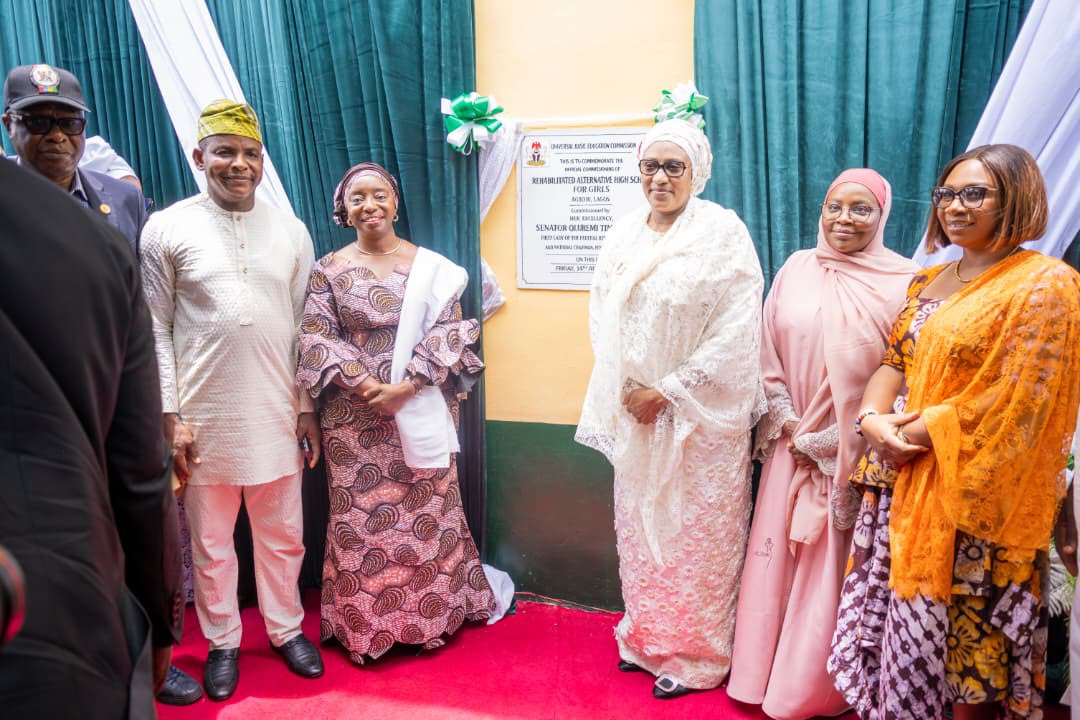
On Friday, August 14, the First Lady of Nigeria, Senator Oluremi Tinubu, CON, represented by the wife of the Vice President, Hajia Nana Shettima, commissioned the country’s first Alternative Secondary School for Girls at Old Ojo Road, Agboju, Amuwo-Odofin, Lagos.
The significance of the development could easily have been overshadowed by the political drama that dominated national attention over the weekend. But beneath the headlines, ballot counts and political calculations surrounding the Osun election was another story — one about giving girls who had been pushed out of the conventional education system an opportunity to return, learn and rebuild their future.
The commissioning was not merely the opening of another school. It marked the beginning of an alternative educational pathway for girls whose schooling had been interrupted by social, economic or personal circumstances, offering them a second chance to complete their secondary education, acquire relevant skills and prepare for further academic and economic opportunities.
In her keynote address at the ceremony, Senator Oluremi Tinubu reaffirmed her commitment to promoting education, empowerment and opportunities for Nigerian girls, while commending the Lagos State Government for complementing the Federal Government’s efforts.

She also proposed that at least one alternative high school for girls should be established in each senatorial district across the country.
“You can achieve what you want with dedication and resilience,” the First Lady told the students, urging them to regard the institution as a platform for rebuilding their dreams and equipping themselves with the knowledge, skills and confidence needed to become productive and responsible citizens.
The timing of the development is particularly noteworthy.
As Nigerians prepared to follow the Osun governorship election the following day — an exercise that naturally commanded extensive media attention because of its political implications — Lagos had already taken a step in another area that would ultimately shape the country’s future: ensuring that girls whose education had been disrupted were not permanently left behind.
For the beneficiaries, the significance of the school may therefore extend far beyond the ceremony and the speeches. It represents the possibility of returning to a classroom after circumstances had interrupted their education and of transforming what could have become a permanent setback into a new beginning.

Earlier, the Lagos State Commissioner for Basic and Secondary Education, Mr Jamiu Tolani Alli-Balogun, described the initiative as a bold and innovative step towards ensuring that every girl has an opportunity to complete her education and realise her full potential.
According to him, the school was established in response to the realities faced by girls whose education had been disrupted, stressing that such circumstances should not permanently define their future.
He explained that the institution provides an alternative pathway through which beneficiaries can return to formal education, acquire relevant knowledge and skills, regain confidence and prepare for further education, entrepreneurship and meaningful participation in society.t
The initiative also raises a broader question about the meaning of educational inclusion in Nigeria.
For a girl whose schooling has been interrupted, the conventional system may not always provide an easy route back. Without an alternative, a temporary interruption can become permanent, closing the door to further education and limiting future economic opportunities.

The new school seeks to keep that door open.
And while the nation looked towards Osun on Saturday to determine its next political direction, Lagos had, just a day earlier, taken a step towards determining another part of Nigeria’s future — by investing in girls who had been given another opportunity to learn.
The Osun election may have produced the weekend’s biggest political headlines, but the commissioning of the Alternative Secondary School for Girls offered a quieter reminder that the future of Nigeria will not be decided at the ballot box alone.
It will also be shaped in classrooms, particularly those that give children and young people a second chance to become what circumstances once threatened to deny them.
Discover more from SAFARI XPRESS NEWS
Subscribe to get the latest posts sent to your email.






Leave a Reply