

By Adebola Muili
Private hospital operators have been urged to strengthen infection prevention and control, emergency preparedness, diagnostic capacity, digital systems and institutional leadership to ensure that healthcare facilities can effectively respond to outbreaks and remain sustainable.
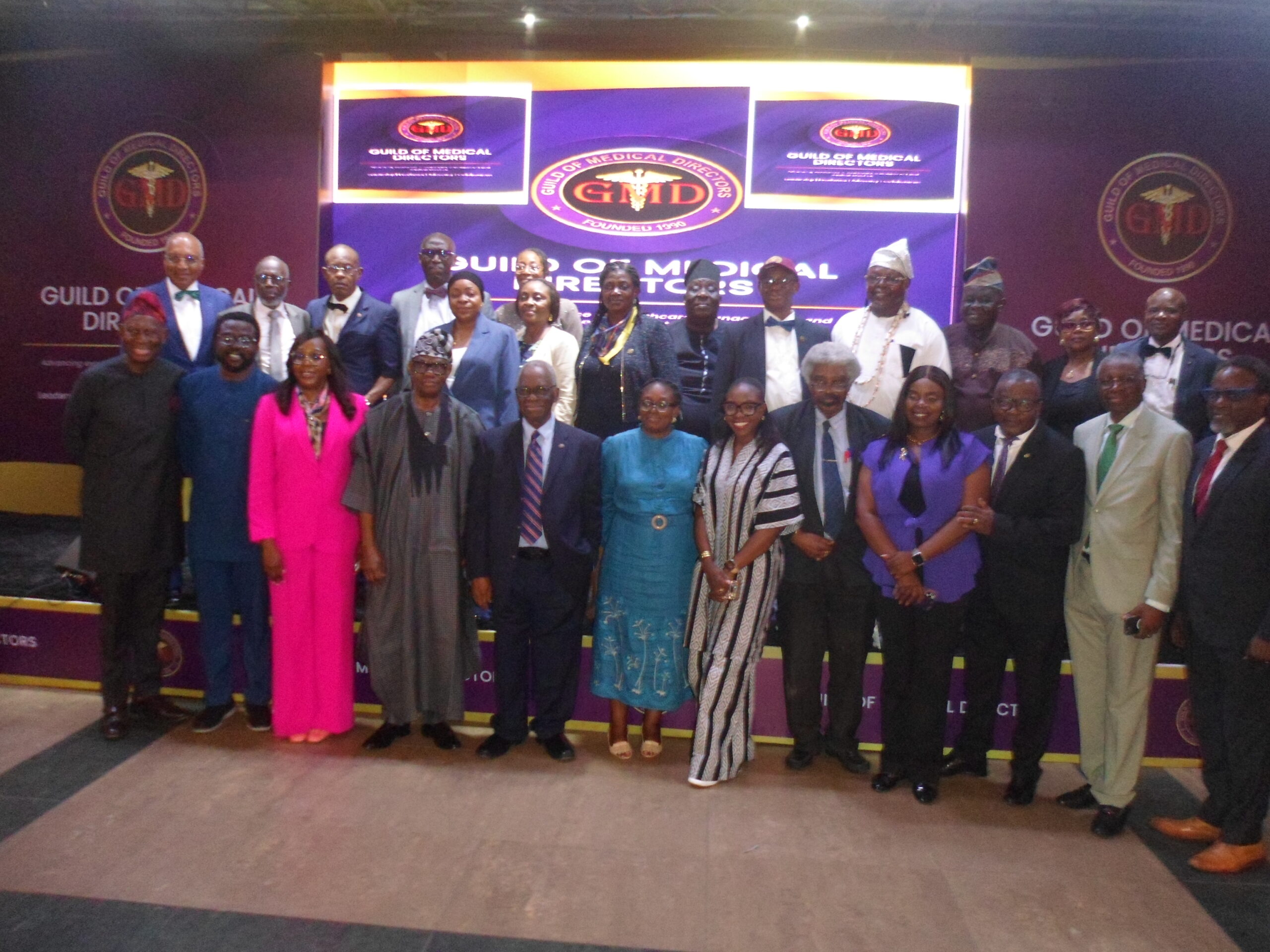
The call was made by experts at the Lagos State Branch of the Guild of Medical Directors (GMD) Scientific Conference and Annual General Meeting held on Friday at the Oriental Hotel, Victoria Island, Lagos.
Speaking on the role of private healthcare services in infection prevention and control, the Medical Director/CEO of Cerba-Lancet Laboratories Nigeria, Dr Yemi Dawodu, said infection prevention should be regarded as a standard of care rather than the responsibility of a particular department within a hospital.
Dawodu said private healthcare providers occupy a critical position in Nigeria’s health system because a large proportion of Nigerians first seek care from private facilities, making their preparedness important to preventing hospital-acquired infections and containing outbreaks.
He cited an estimated 15.75 per cent pooled prevalence of hospital-acquired infections among Nigerian inpatients across studies, noting that the burden translated into hundreds of thousands of infections and significant deaths and economic losses.
According to him, surgical-site infections also remain a major concern, with a pooled prevalence of 22.2 per cent reported across seven Nigerian studies.
Dawodu said effective infection prevention measures could substantially reduce the burden, stressing the importance of hand hygiene, surveillance, appropriate use of personal protective equipment, staff training, environmental controls and reliable laboratory diagnosis.
He said, “Infection prevention is not a department; it’s a standard of care.”
He also identified diagnostic laboratories as a critical component of infection control, explaining that appropriate specimen collection, culture and antimicrobial susceptibility testing could help hospitals identify infections, guide treatment and develop facility-specific antibiograms.

Dawodu said private hospitals should also become active surveillance points for outbreaks and antimicrobial resistance, rather than merely responding after infections had spread.
He noted that an assessment of 415 healthcare facilities in Lagos between July and October 2023 showed that 48.8 per cent had inadequate infection prevention and control capacity under the WHO framework.
Although private facilities performed better than public facilities in the assessment, he stressed that the results still showed a need for significant improvement across the sector.
Dawodu said private hospitals could begin with practical measures including appointing infection prevention focal persons, conducting WHO infection prevention self-assessments, strengthening hand-hygiene programmes, monitoring surgical-site infections, developing antibiograms and preparing isolation and referral arrangements for suspected high-consequence infections.
He described infection prevention as an investment in the survival and credibility of hospitals, saying, “Infection prevention is not a cost centre. It is our licence to operate.”
Also speaking, Consultant Infectious Diseases Physician at Lagos University Teaching Hospital, Dr Adefolarin Opawoye, warned medical directors against treating emerging and re-emerging infectious diseases as issues that could be addressed only when an outbreak had already occurred.
Opawoye said emerging diseases could be driven by factors including zoonotic transmission, urbanisation, land-use changes, climate-related events, international travel and trade, conflict, antimicrobial resistance and weaknesses in surveillance and diagnosis.
He said re-emerging diseases such as diphtheria, cholera, measles, yellow fever and tuberculosis could also gain ground where immunisation, surveillance and public-health systems were weakened.
Using the 2014 Ebola outbreak in Nigeria as a case study, Opawoye recalled how the arrival of Patrick Sawyer in Lagos and his admission at First Consultants Medical Centre demonstrated the speed at which an infectious disease could place a private hospital, its workers and the wider community under pressure.
He said the experience showed the importance of early recognition, isolation, communication and decisive leadership.
According to him, private hospitals in Lagos are particularly exposed because of the state’s population density, mobility, international connections and the role of private facilities as first points of contact for many patients.

He advised medical directors to establish clear triage and isolation procedures, ensure that staff know whom to contact at any hour, maintain adequate supplies of personal protective equipment and regularly conduct emergency drills.
Opawoye stressed that suspected cases of high-consequence infectious diseases should not be allowed to move from one hospital to another in search of treatment.
He outlined the emergency response sequence as: “SUSPECT → HOLD → NOTIFY → ESCALATE,” urging hospitals to notify the appropriate public-health authorities immediately when a serious infectious disease is suspected.
Beyond clinical preparedness, another speaker at the conference, Medical Director of Iwosan Lagoon Hospitals, Victoria Island, Dr Ayobami Kuyoro, challenged medical directors to rethink the way they build and manage private hospitals.
Kuyoro said the growth of a hospital should not depend indefinitely on the personal presence or intervention of its founder or medical director.
He asked medical directors to consider what would happen to their hospitals if they were suddenly unavailable for several months, including whether clinical quality, patient care, revenue generation, decision-making and organisational growth would continue.
According to him, the transition from medical practice to running a hospital and ultimately building a healthcare enterprise requires systems that can function beyond individual personalities.
He said, “Your greatest legacy is what the organisation can do without you.”
Kuyoro explained that growth and scale were not the same, noting that a hospital could increase its patient numbers and revenue while simultaneously becoming more complex and increasingly dependent on its founder.
He urged medical directors to document processes, delegate decisions appropriately, measure performance, understand costs and revenue, manage capacity and develop leaders who could operate independently.
He also called for greater attention to the wider healthcare ecosystem involving insurers, banks and investors, technology companies, pharmaceutical firms, diagnostic providers, government agencies, professional bodies and other healthcare institutions.

Kuyoro said technology should not simply be introduced into existing inefficient processes, warning that digitising a broken process would only create a digital version of the same problem.
He said hospitals should first identify the problem, redesign the process, determine the data required and establish how outcomes would be measured before deploying technology.
In a related presentation, a healthcare technology entrepreneur, Dr Lapoli Olade, highlighted the growing role of integrated digital systems in improving hospital operations and patient care.
Olade, who spoke from his experience in the pharmaceutical and healthcare sectors, said many hospitals still operate with separate systems for patients, clinicians, pharmacies, laboratories, inventory, billing, insurance and other functions.
He explained that the lack of integration could make it difficult for medical directors to obtain a real-time picture of what was happening across their facilities.
He presented the capabilities of I Prescribe Limited, including its I Prescribe Healthcare platform, which combines healthcare enterprise resource planning with electronic medical record functions, as well as its digital prescription and telemedicine services.
Olade said integrated systems could provide medical directors with better visibility of patient flow, inventory, bed availability, revenue, insurance claims and other operational indicators.
He also discussed the use of artificial intelligence and ambient listening technology to assist clinicians with documentation by converting consultations into structured clinical notes.
According to him, the objective should not be technology for its own sake but the creation of systems that allow healthcare professionals to work with better information and enable hospital managers to make faster and more informed decisions.

Another presentation at the conference focused on diagnostic technology and faster laboratory turnaround.
The presenter demonstrated diagnostic equipment capable of conducting multiple tests simultaneously, with claimed turnaround times of minutes for selected investigations, including cardiac, thyroid, fertility, inflammatory, metabolic and other test panels.
The presentation also highlighted the use of automated quality-control features and dry chemistry technology for a range of laboratory investigations, with the aim of improving access to testing and reducing delays in obtaining results.
The presenters collectively stressed that better diagnosis, infection surveillance and digital data were increasingly important to the operation of modern private hospitals.
The conference therefore placed emphasis not only on the clinical responsibilities of medical directors but also on their roles as employers, business leaders, system builders and participants in the wider health sector.
Across the presentations, speakers identified infection prevention, outbreak preparedness, laboratory capacity, trained personnel, reliable data, digital integration, financial discipline and institutional leadership as interconnected elements of sustainable healthcare delivery.
The discussions also underscored the need for private hospitals to move from dependence on individual medical directors towards systems capable of maintaining quality and continuity of care even when the founder or chief executive is unavailable.
The Guild’s Lagos State Branch Scientific Conference and AGM thus brought together clinical, public-health, business and technology perspectives around a common challenge: how private healthcare facilities can build systems that protect patients and health workers while remaining operationally resilient and sustainable.
Discover more from SAFARI XPRESS NEWS
Subscribe to get the latest posts sent to your email.












Leave a Reply