

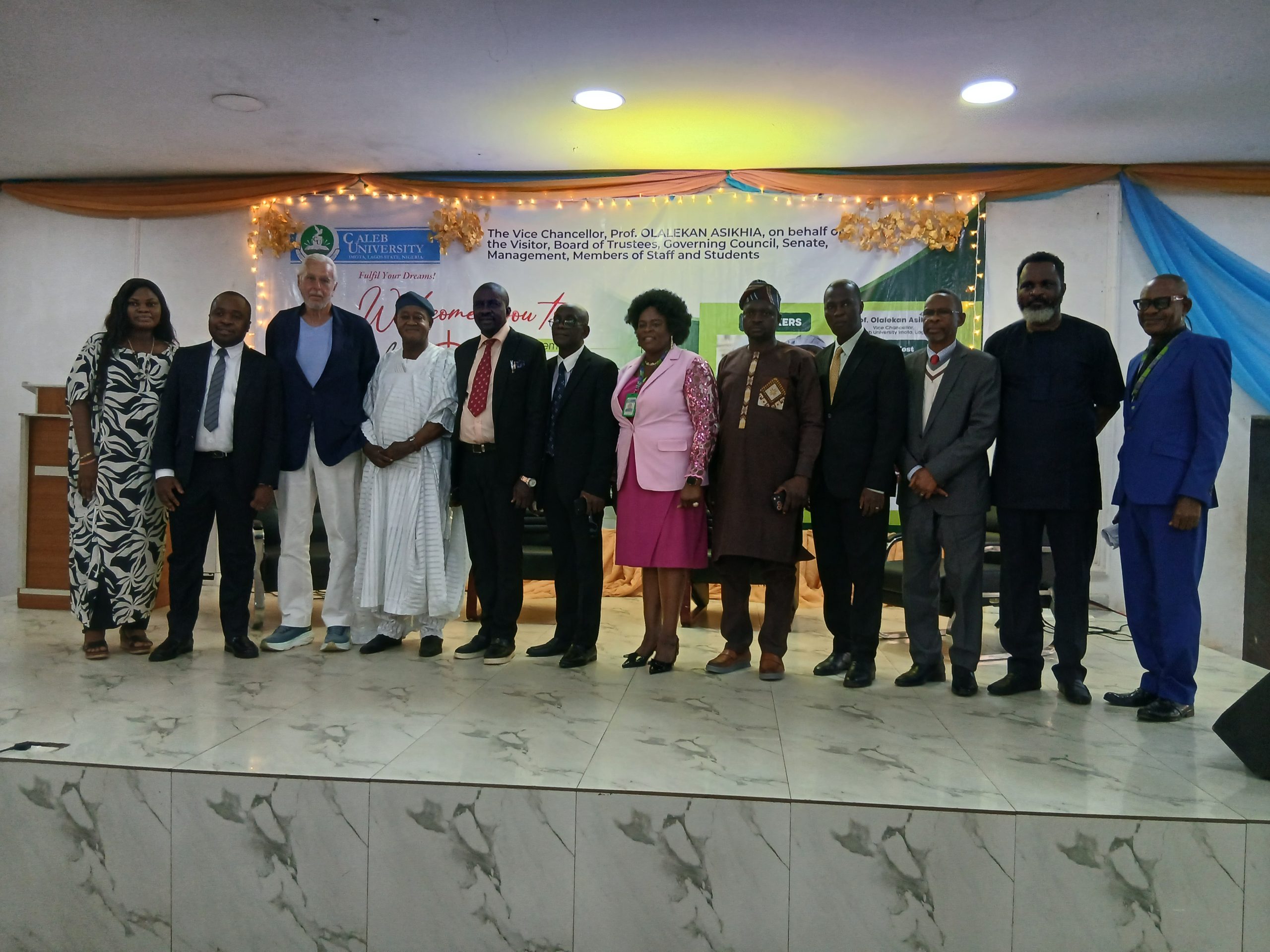

By Adebola Isimijola, Lagos
Media practitioners, newspaper proprietors, editors, academics and communication experts have called for urgent digital transformation, innovation and sustainable business models to secure the future of local newspapers amid the rapid evolution of technology.
The stakeholders made the call on Monday at the Journalism Outlook Conference 2026, organised by the College of Communication and Media Studies, Caleb University, Imota, Lagos, where they stressed that the survival of journalism depends on embracing technology without sacrificing accuracy, credibility and ethical standards.
Speaking at the conference, the Managing Director/Publisher of Oriwu Sun Newspaper, Mr. Monsor Olowosago, said newspapers must reinvent their operations to remain relevant in the platform-driven digital era, stressing that quality journalism alone cannot sustain any media organisation without a viable business model.
Drawing from over four decades of publishing experience, Olowosago said community newspapers must understand their audiences, prioritise local content and secure sustainable advertising revenue, describing advertisement as the lifeblood of newspaper publishing.
“There is no newspaper anywhere in the world that can survive without advertisement. Good journalism is important, but sustainability is what keeps the newspaper alive,” he said.
He urged aspiring publishers to carry out proper feasibility studies before establishing newspapers and to build strong relationships within their communities.
In his presentation on The Future of Newspaper Proprietorship in a Platform-Driven Digital Economy, Deputy President of the Newspaper Proprietors’ Association of Nigeria (NPAN), Mr. Frank Aigbogun, said Nigerian newspapers must diversify their revenue streams through digital subscriptions, memberships, multimedia content, events and strategic partnerships.

According to him, newspapers should leverage digital platforms, podcasts, mobile applications, data journalism and artificial intelligence to reach wider audiences while maintaining professional ethics.
Aigbogun maintained that local newspapers remain indispensable because they promote accountability, preserve culture, strengthen civic participation and connect communities with government.
Earlier, Provost of the Nigerian Institute of Journalism (NIJ), Mr. Gbenga Adefaye, challenged journalism training institutions to redesign their curricula to reflect the realities of the digital media ecosystem.
He observed that while newspaper circulation had declined significantly, journalism itself remained relevant because people still consume news through different digital platforms.
“Journalism is not dead. It will not die. What has changed is the way audiences consume news,” Adefaye said.
He advocated greater investment in multimedia laboratories, radio and television studios, artificial intelligence, digital journalism, social media management and media entrepreneurship to equip graduates for the changing media landscape.
The Acting Dean of Caleb University’s College of Communication and Media Studies, Dr. Kayode Okunade, said the conference was organised to provide a platform for scholars and industry practitioners to exchange ideas on the future of journalism.
He noted that discussions focused on digital transformation, artificial intelligence, data journalism, media literacy, digital monetisation and stronger collaboration between academia and industry.
Also speaking, Vice-President (West) of the Nigerian Guild of Editors (NGE), Dr. Kabir Alabi Garba, described local newspapers as indispensable institutions that promote democratic accountability, preserve cultural identity and strengthen community development.
“The real product has never been paper; the real product is credible information. Newspapers must reinvent not journalism itself but how they deliver content, engage audiences and generate revenue,” he said.
During a panel session on University-Industry Partnership for Media Innovation and Knowledge Exchange, participants emphasised the need for stronger collaboration between journalism schools and media organisations.
They advocated regular industry engagement, curriculum reviews, practical newsroom exposure, mentorship programmes and greater emphasis on media entrepreneurship to prepare graduates for the realities of modern journalism.
The conference concluded with a consensus that innovation, technological adaptation, ethical journalism and sustainable business models remain critical to the survival and growth of local newspapers in Nigeria and across Africa.
Discover more from SAFARI XPRESS NEWS
Subscribe to get the latest posts sent to your email.









#digital
… reposted this!