

By Adebola Muili
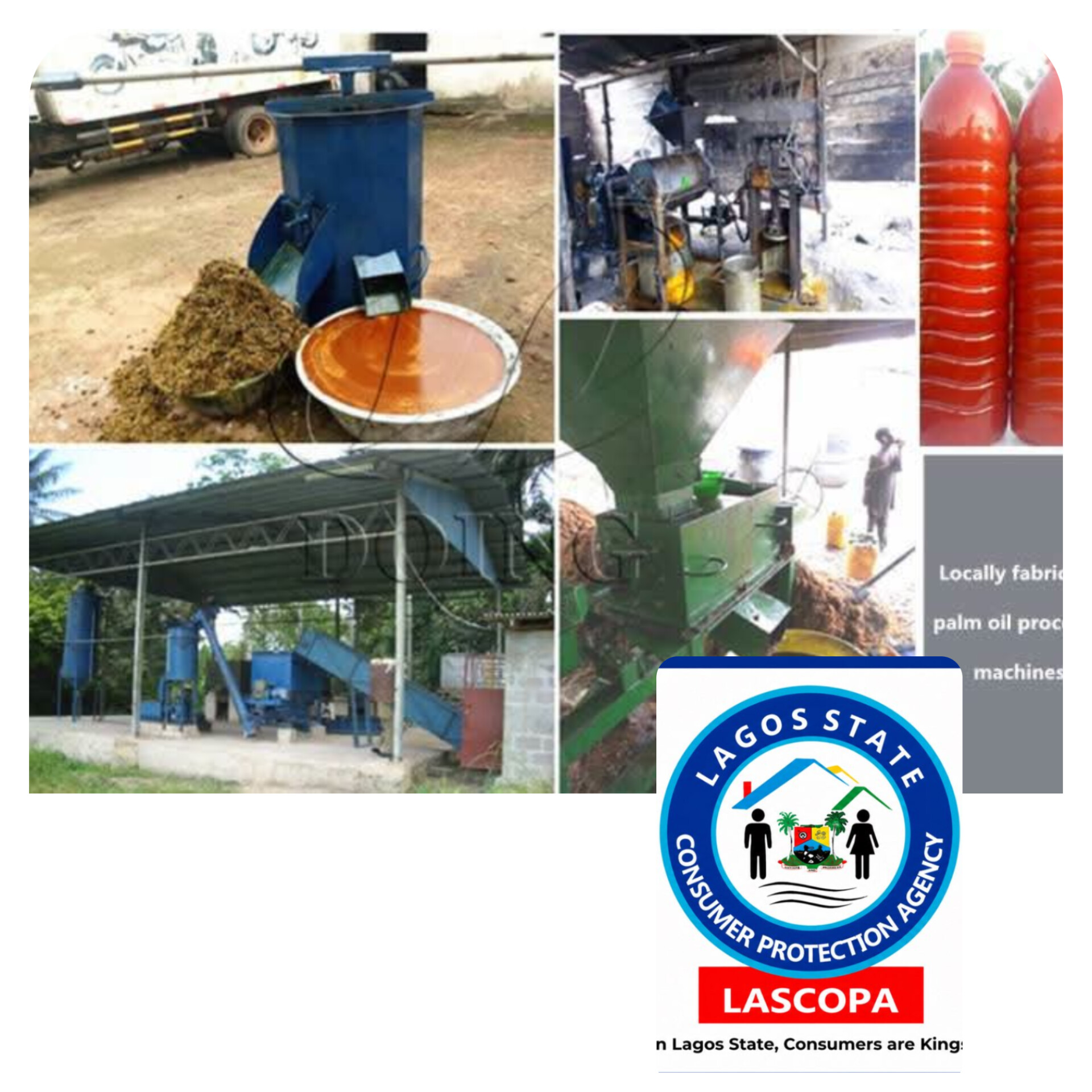
The Lagos State Consumer Protection Agency (LASCOPA) has raised the alarm over increasingly sophisticated adulteration of palm oil, urging consumers across the state to exercise caution when purchasing the product.
The agency gave the warning in a statement made available to journalists on Tuesday, following a technical presentation at the Lagos State Food Safety Conference and Exhibition 2026 by Dr. Nurah Oseni, a Senior Lecturer in the Department of Food Technology, Auchi Polytechnic.
Oseni, who presented a paper titled, “Palm Oil Adulteration: Emerging Risks, Detection Strategies and Regulatory Control,” said palm oil was particularly vulnerable to adulteration because of its high trading volume, price differences, informal market practices and consumers’ perception that deep-red colour indicates quality.
She identified the use of potentially carcinogenic Sudan and Azo dyes to alter the colour of palm oil as one of the emerging risks, alongside the blending of palm oil with recovered or recycled oils, including spent cooking oil.
According to her, some adulterators also combine multiple substances in a manner designed to evade basic quality checks, making detection increasingly difficult.
Oseni further raised concerns over digital and traceability fraud, including the falsification of product labels and batch records, stressing the need for stronger surveillance and improved detection mechanisms across the palm oil supply chain.
She advised consumers to adopt simple visual checks as an initial precaution, noting that palm oil may separate into layers, with the lower layer typically appearing orange to red-yellowish rather than uniformly deep red.
The lecturer, however, cautioned that visual inspection alone could not confirm adulteration, recommending a tiered detection system involving risk-based screening, rapid physicochemical and spectroscopic tests, as well as confirmatory laboratory analysis.
She also stressed the importance of proper sampling and chain-of-custody procedures in ensuring reliable test results and effective enforcement.
Oseni proposed a five-step surveillance framework for Lagos comprising “Risk Map, Sample, Screen, Confirm and Act,” supported by an adulteration intelligence database and coordinated responsibilities among processors, traders, laboratories, regulators, researchers and consumers.
The General Manager/CEO of LASCOPA, Afolabi Solebo, reaffirmed the agency’s commitment to protecting consumers from unsafe and substandard products.
Solebo urged Lagosians to “shine their eyes” and report suspected adulterated palm oil and unscrupulous traders through the agency’s official channels, as market surveillance is intensified across the state.
Discover more from SAFARI XPRESS NEWS
Subscribe to get the latest posts sent to your email.












Leave a Reply