

By Adebola Isimijola, Lagos
When news filtered through Lagos that Toba Ajiboye, popularly known as Toba Ijaya, had died from gunshot wounds sustained in an attack by unidentified gunmen, it was more than the report of another violent crime. For many within the transport sector, it reopened old wounds and revived an uncomfortable question that has lingered for years: why do influential transport union leaders in Lagos so often become victims of deadly violence?
Ajiboye, the Organising Secretary of the Lagos State Council of the National Union of Road Transport Workers (NURTW), reportedly came under attack on Sunday night shortly after leaving Fadeyi along the Ikorodu Road axis. He was rushed to hospital after sustaining gunshot wounds but later died from his injuries despite efforts by medical personnel to save his life.

The Lagos State Police Command confirmed the attack and said investigations were underway to identify and apprehend those responsible. The command also appealed to members of the public with useful information to assist detectives, while assuring residents that security had been strengthened in the area.
Ajiboye’s death is the latest in a succession of killings involving prominent transport union figures in Lagos—incidents that have repeatedly drawn attention to the complex relationship between grassroots political influence and the transport sector. While each case has unfolded under different circumstances and investigators have not established a common motive linking them, the recurring violence has continued to provoke public concern and renewed calls for stronger measures to safeguard influential grassroots leaders.
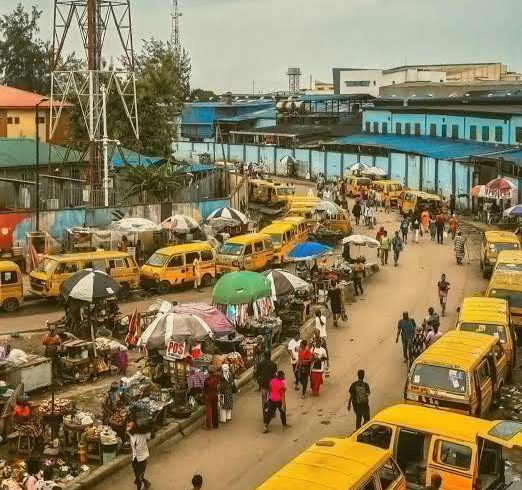
The National Union of Road Transport Workers occupies a unique position in Lagos. Every day, its officials supervise activities in motor parks and bus terminals that serve millions of commuters. From the bustling corridors of Oshodi and Ikorodu to Agege, Mile 2, Ojota and Ajah, the union maintains a far-reaching presence that extends into virtually every community in the state.
Its officials interact daily with commercial drivers, traders, artisans and residents, making the union one of the most organised grassroots institutions in Lagos. Beyond regulating transport activities, many of its leaders have become influential community figures whose voices carry considerable weight at the local level.
Political analysts say this extensive grassroots structure explains why transport union leaders have remained important stakeholders during election campaigns.
Their organisational network, familiarity with local communities and capacity to mobilise people have made them valuable allies for political actors seeking support at the grassroots. In many communities, transport union officials have become more than administrators of bus parks; they are recognised as community leaders and mobilisers with significant local influence.
That influence, however, has often come at a heavy price.
One of the earliest high-profile incidents occurred on January 6, 2008, when former Lagos State NURTW Chairman, Alhaji Saka Saula, was assassinated. His death came only months after the 2007 general elections and shortly after his release from detention in Abuja, sending shockwaves through both political and transport circles.
Seven years later, tragedy struck again.
On April 9, 2015, Olayemi Matthew Eniola, popularly known as Esi Oluwo or Baba Esi, was killed during violence that erupted at a political campaign rally in Oshodi. The incident highlighted how political gatherings had increasingly become volatile spaces for individuals with significant grassroots influence.
The pattern resurfaced on May 29, 2017, when Rasaq Bello, popularly known as Hamburger and then Chairman of the Motorcycle Owners Association of Lagos State, was shot dead during the All Progressives Congress (APC) local government primary election. His killing attracted widespread attention because it occurred during an internal party contest.
Political violence again claimed another influential grassroots figure on January 8, 2019, when Ismaila Azeez Ibrahim, widely known as Legacy, reportedly died after being stabbed during violent clashes at a governorship campaign flag-off in Ikeja.
Again, on July 8, 2021, Samuel Kayode, popularly known as Ekpo Kinkin and then Vice-Chairman of the Lagos State NURTW, was shot dead during an APC political rally in the Agboju/Oriade area of Lagos.
Viewed individually, each incident has its own background and investigators have not concluded that they stemmed from a common cause. Taken together, however, they paint a troubling picture of recurring violence involving influential transport union figures whose prominence extends beyond the transport sector.
Security experts have repeatedly warned that political violence often begins long before Election Day. Party primaries, campaign rallies, stakeholder meetings and local mobilisation exercises have increasingly become flashpoints where rival interests collide, sometimes with deadly consequences.
Political scientists also point to the strategic position occupied by transport unions in Lagos. With thousands of members spread across motor parks, garages and transport routes, the union possesses one of the largest organised grassroots structures in the state. Its members interact daily with commuters, market associations and residents, making the organisation an important force in community mobilisation.
That strategic position has inevitably placed some transport union leaders at the centre of intense political competition, particularly during election seasons when grassroots structures become critical to campaign activities.
Although law enforcement agencies routinely investigate violent incidents, many of the killings involving transport union leaders have continued to generate public concern, with families, colleagues and community leaders repeatedly demanding justice and accountability.
Following previous incidents, civil society organisations and security analysts have consistently called for stronger measures to curb election-related violence. They have advocated improved intelligence gathering, stricter enforcement of laws against political thuggery, enhanced security during political activities and more effective prosecution of those responsible for violent crimes.
Some governance experts have also argued that transport unions should increasingly concentrate on their statutory responsibilities while maintaining institutional neutrality in partisan political contests. Others, however, acknowledge that achieving such separation remains difficult because of the longstanding historical relationship between grassroots politics and transport unions.
As investigations into Ajiboye’s killing continue, many observers believe the tragedy should serve as another opportunity to address the broader challenge of political violence and the safety of influential grassroots leaders.
For the families who have lost loved ones, the colleagues left behind and the communities repeatedly affected by such incidents, justice remains the overriding expectation.
As Lagos prepares for future political contests, stakeholders say strengthening democratic institutions, improving security around political activities and promoting dialogue over confrontation will be essential to preventing further loss of lives.
Ultimately, the history of the NURTW’s involvement in Lagos politics is one of immense grassroots influence, organisational strength and community relevance. Yet it is also a story marked by painful losses. Whether that narrative changes in the years ahead will depend largely on the collective commitment of political leaders, security agencies, transport unions and citizens to reject violence and uphold the principles of peaceful democratic participation.
Discover more from SAFARI XPRESS NEWS
Subscribe to get the latest posts sent to your email.

Leave a Reply