

By Adebola Muili
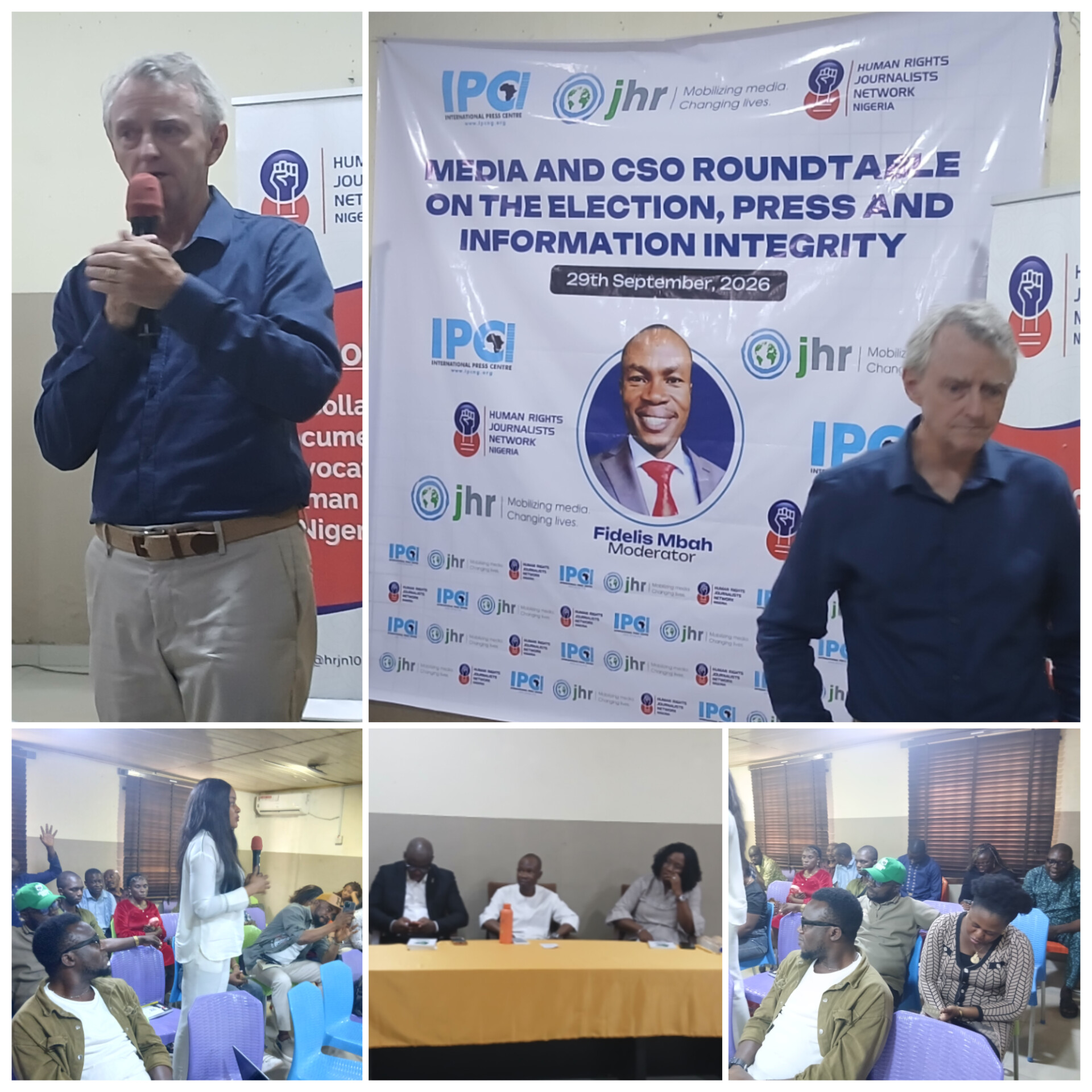
Stakeholders in Nigeria’s electoral process have called for stronger collaboration between the Independent National Electoral Commission (INEC), media organisations and civil society groups to improve voter education, protect electoral rights and strengthen public confidence ahead of the 2027 general elections.
The call was made on Tuesday at a Media and CSO Roundtable on the Election, Press and Information Integrity organised in Lagos by the International Press Centre (IPC), Journalists for Human Rights (JHR) and the Human Rights Journalists Network Nigeria.
Participants at the roundtable, which brought together INEC representatives, journalists and civil society actors, identified misinformation and disinformation, vote buying, difficulties in obtaining Permanent Voter Cards (PVCs), declining trust in the electoral process and the safety of journalists as issues requiring urgent attention ahead of the elections.
A representative of INEC, Mrs Emeh, said voter education should not be regarded as the sole responsibility of the electoral commission, urging the media, CSOs and members of the public to play active roles in educating citizens about their electoral rights and responsibilities.
She said the commission had been engaging communities, markets, media platforms and other groups as part of efforts to encourage eligible Nigerians to register, collect their PVCs and participate in the electoral process.
According to her, INEC could not single-handedly address issues such as vote buying, particularly when such activities take place within communities without being reported.
“Voter education is not only the job of INEC. All of us here are involved because sometimes we may even get to know where these kinds of things are going on,” she said.
The official also explained that voters whose cards were lost or damaged were expected to follow the prescribed replacement process rather than undertaking fresh registration, warning that the commission’s systems could detect duplicate registrations.
She said voters who followed the appropriate procedures for replacement, transfer or other services would be attended to through the relevant processes.
A major part of the discussion centred on the role of journalists in ensuring information integrity during the election period.
Seun Oloketuyi, a participant, urged media practitioners to avoid partisan reporting, verify claims before publication and ensure that political actors were not allowed to use the media to circulate unverified information.
He said journalists must also accept responsibility for misinformation in the public space, noting that the media sometimes publish claims from politicians without adequate verification because of the pressure to break news.
Another participant, a fact-checker, called for stronger fact-checking mechanisms within newsrooms and greater collaboration between media organisations, INEC and civil society groups to identify and counter false information before it spreads.
The discussion also highlighted the need for journalists to give fair coverage to candidates and political parties rather than concentrating disproportionately on a few prominent contenders.
Participants argued that the way electoral issues and candidates are presented by the media could influence public perception of the political process and urged journalists to uphold professional standards throughout the election cycle.
The stakeholders further raised concerns over voter apathy, particularly among young Nigerians, with some participants arguing that the problem was not necessarily a lack of political awareness but could also be linked to difficulties encountered in accessing the electoral process and declining confidence in the system.
A participant from Paradigm Initiative, Peculiar Showale, said some young Nigerians had experienced difficulties while registering, transferring their voting details or collecting their PVCs, which could discourage them from participating.
She said young people remained politically interested but could become disillusioned when their experiences with the electoral system did not match their expectations.
The roundtable also considered the role of data protection and privacy in the electoral process, particularly against the background of increased digital activity and the circulation of personal information.
Participants advocated better mechanisms for citizens to report electoral irregularities, including direct communication channels through which journalists and civil society groups could reach responsible INEC officials during elections.
They also called for improved logistics and timely deployment of election materials, stressing that avoidable delays could further undermine public confidence in the electoral process.
Another issue raised was the safety of journalists covering elections, with participants recounting experiences of threats and pressure encountered while reporting politically sensitive events.
A journalist who spoke at the event urged colleagues to exercise caution while covering election-related activities, stressing that professional responsibility should be balanced with personal safety.
He said journalists should also explore available technological tools to document events accurately while avoiding reports that could inflame tensions or expose reporters and members of the public to unnecessary danger.
The participants agreed that restoring public confidence would require sustained engagement among electoral authorities, the media, civil society organisations, political actors and voters.
They maintained that credible elections depended not only on the actions of INEC but also on the conduct of political actors, voters, journalists and other stakeholders before, during and after the polls.
Discover more from SAFARI XPRESS NEWS
Subscribe to get the latest posts sent to your email.


Leave a Reply