

By Adebola Muili
The Federal Government is moving into the next phase of its power-sector reform programme, with deeper grid stabilisation, development of a Transmission Super Grid, increased investment and improved utilisation of existing infrastructure among its priorities.
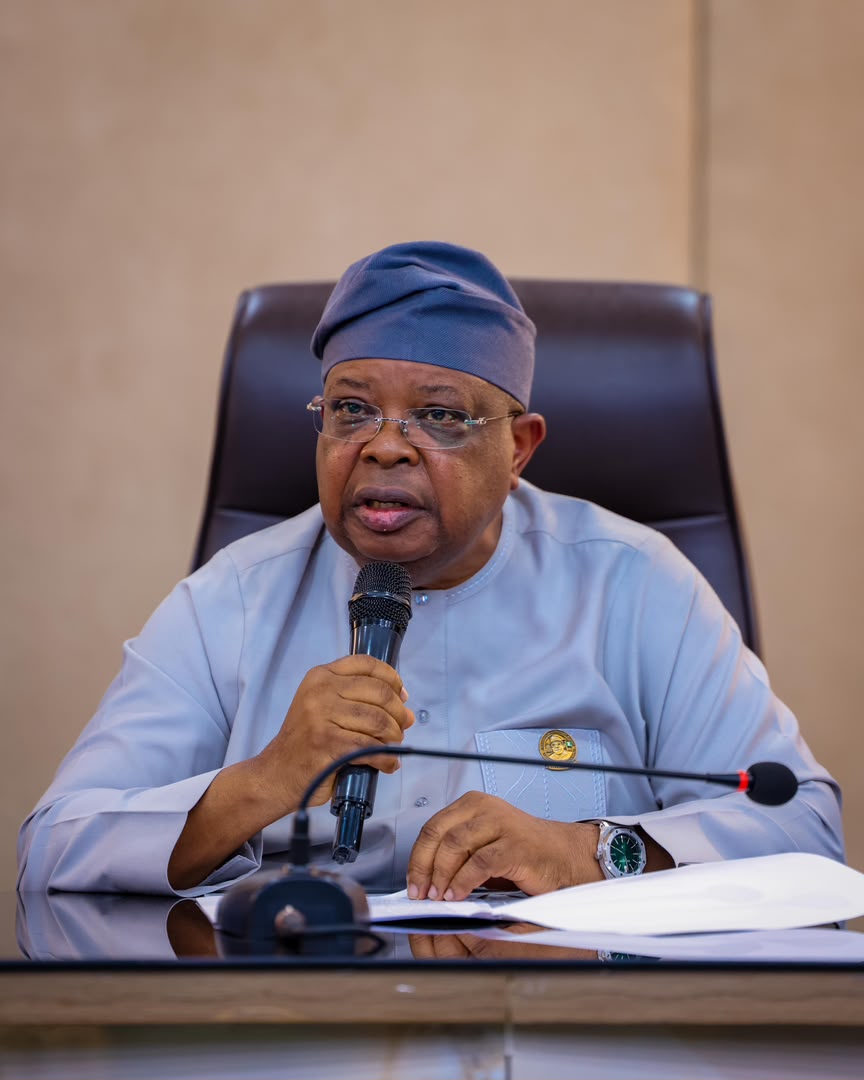
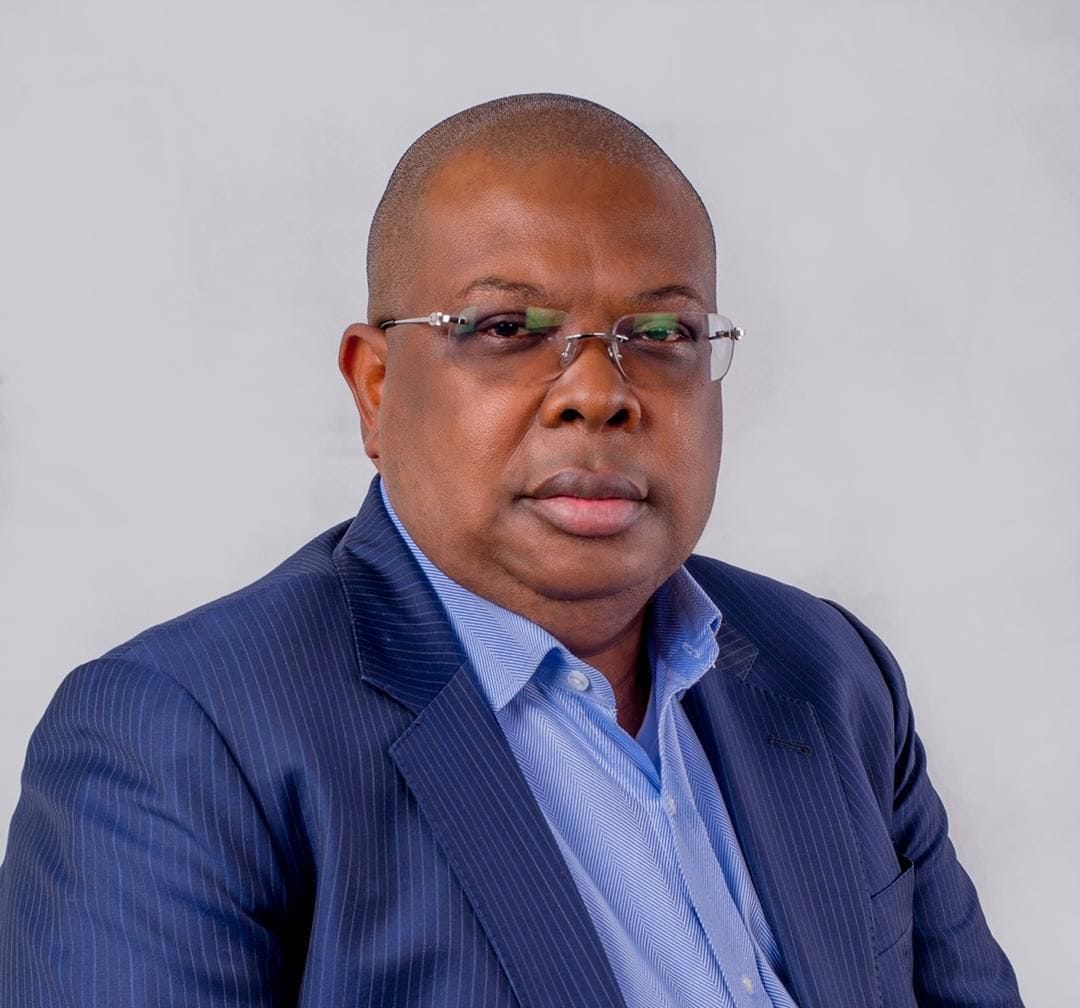
The Minister of Power, Joseph Olasunkanmi Tegbe, disclosed this in statements made available to journalists on Tuesday to mark his first 100 days in office, saying the initial phase of his tenure had focused on diagnosis and stabilisation of the electricity value chain.
Tegbe said the Ministry had concentrated on repairing existing infrastructure, recovering stranded assets, restoring market discipline and strengthening governance, while acknowledging that many Nigerians were still experiencing unreliable electricity and the high cost of self-generation.
He said one of the major achievements was the restoration of the 375MW Alaoji open-cycle power plant to the national grid after three years offline.
The Minister also disclosed that transformers commissioned at Apapa, Ijora, Alausa and Lekki in Lagos had unlocked 672MW of transmission capacity, while a new 300MVA transformer at Katampe, Abuja, unlocked an additional 240MW.
He said generation and transmission had exceeded 5,000MW in recent weeks, compared with the 3,700MW to 4,700MW range before June, with a generation peak of 5,330MW recorded during August and September.
Tegbe, however, cautioned that national generation peaks could not adequately represent the electricity experience of individual communities.
“When I say that there are improvements in certain places, I do not categorically deny the experiences of those that are yet to benefit,” he said, stressing that the task was to extend the gains to every community.
On sector liquidity, the Minister said an estimated ₦1.23 trillion had been raised towards addressing the power-sector debt backlog, as part of a broader programme targeting the sector’s estimated ₦3.3 trillion debt.

He explained that improving liquidity was essential because the financial weakness of one segment of the value chain could undermine the performance of others.
According to him, interventions along the Ikorodu-Sagamu industrial corridor had also addressed energy theft and revenue losses estimated at ₦120 billion annually.
On metering, Tegbe said about 350,000 meters were installed during the first 100 days, bringing cumulative installations to 1,004,260 as of August 2026.
He added that the resolution of the AMMON litigation had unlocked the procurement of approximately 1.4 million smart meters, while metering of military formations had reached 90,000 installations.
The Minister said 5,000 young Nigerians were undergoing training as smart-meter installers under the Power Force programme, describing the measures as part of efforts to replace disputed estimates with measured consumption and improve billing and revenue accountability.
Tegbe also stated categorically that the Federal Government had no plan to increase electricity tariffs.
“Let me categorically state—and this is not a political statement—we have no plan to increase electricity tariffs,” he said.
On electricity access, the Minister said 62 solar and mini-grid installations across 30 states had delivered about 43.6MW of installed solar capacity and 41,735 new connections, with an estimated reach of more than 208,000 people.

He said the government had also launched the Renewable Asset Management Company, RAMCO, to professionally manage publicly financed renewable-energy assets and support their long-term sustainability.
According to him, RAMCO would contract competent operators for metering, billing, collection and maintenance, while targeting the mobilisation of ₦3 trillion over the coming years to support long-term investment and the viability of public renewable-energy assets.
Tegbe said the Ministry had also facilitated, with relevant government agencies, the release of more than 300 containers of critical power equipment held at the ports.
He said the equipment would be inspected, deployed and installed to support transmission infrastructure upgrades, describing the release as necessary to address the situation where unfinished power projects existed alongside critical equipment stranded in storage.

Looking ahead, Tegbe identified deeper grid stabilisation along the Lagos, Enugu-Port Harcourt and Abuja-Kaduna-Kano corridors as key priorities.
He said technical audits had commenced along the Lagos and Abuja corridors to identify system weaknesses and guide investment towards interventions with verified impact.
The Minister also said the Ministry would begin developing the Transmission Super Grid, while continuing corridor stabilisation through the Presidential Power Initiative and related programmes.
As part of efforts to mobilise investment, Tegbe disclosed that a recent Nigeria-China power mission had secured commitments from Sinomach, CMEC, CNEEC, TBEA, HengFei Cables and Chinese financiers to accelerate priority projects.
He said CMEC had reaffirmed its role in the 1.9GW Presidential Power Initiative portfolio, with the first transmission lines scheduled for delivery in the first quarter of 2027.
CNEEC, he added, had advanced financing arrangements for the $116 million Zungeru evacuation project, with approval targeted before the end of the year.
TBEA, according to the Minister, had also committed to a proposed $500 million industrial park for power-equipment manufacturing, alongside accelerated Presidential Power Initiative work and a three-year delivery pathway for the East-West Super Grid.
HengFei Cables had committed to supplying cables for the second phase of the Presidential Power Initiative and proposed establishing an assembly plant and training centre in Nigeria.

Tegbe said the Ministry had equally signed a cooperation agreement with Huawei Technologies covering grid digitalisation, loss reduction, SCADA gap assessment and technical training.
He said improved digital visibility and system control were necessary to strengthen the management and performance of the national electricity network.
On hydropower, the Minister said the government was engaging Energy China on the Mambila Hydropower Project following Nigeria’s victory in the arbitration case.
He said the contractor had been directed to explore the most practical delivery approach, including a possible phased implementation, adding that larger hydropower projects such as Mambila, as well as small hydropower projects serving agricultural corridors, remained part of the country’s medium- and long-term electricity strategy.
Tegbe said the Federal Government would also continue working with development partners, including the World Bank, African Finance Corporation, African Development Bank, Sustainable Energy for All and UK PACT, on financing, technical assistance, hydropower and electrification.
He said the next six months would focus on converting the repairs, investments and reforms already undertaken into more visible improvements in supply reliability, billing accuracy and the resolution of faults and complaints.
“Stabilisation is the essential first stage of expansion,” Tegbe said, reaffirming the Ministry’s commitment to visible, incremental improvements and measurable performance across the power sector.
Discover more from SAFARI XPRESS NEWS
Subscribe to get the latest posts sent to your email.



Leave a Reply