


By Adebola Muili
The Federal Government has approved a $2 billion investment in a new East–West Super Grid expected to expand Nigeria’s electricity transmission capacity to at least 19,000 megawatts, as part of efforts to address persistent challenges in the power sector and improve electricity supply across the country.
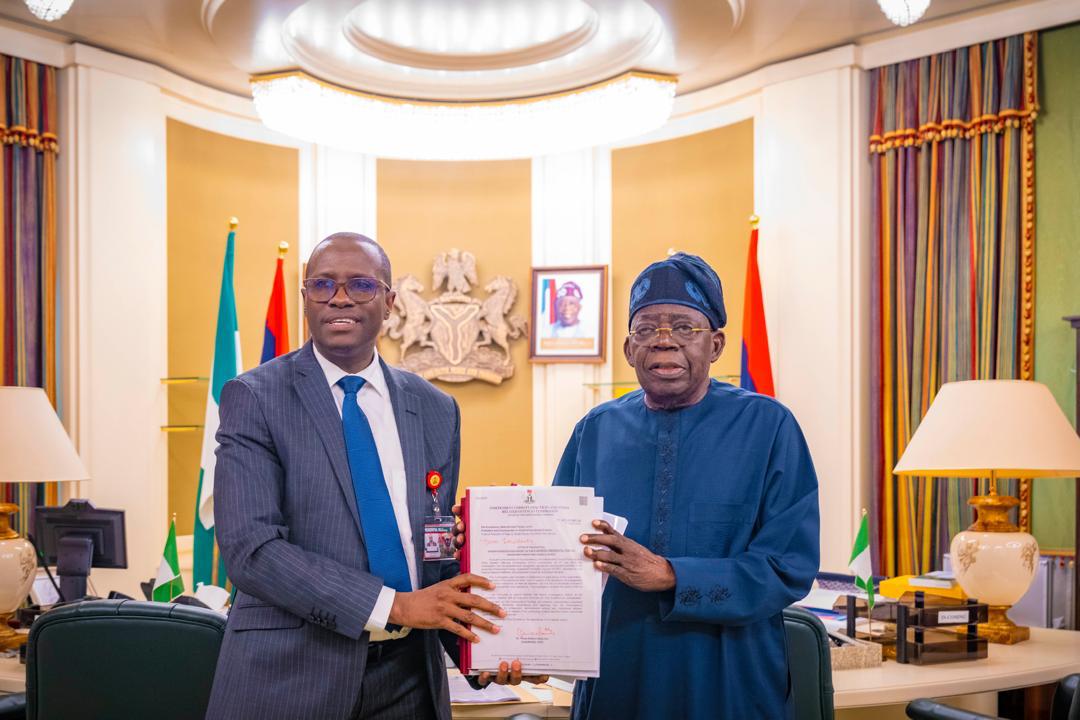
The Minister of Power, Joseph Tegbe, disclosed this during a television interview on TVC on Wednesday, describing the project as a major intervention in the Tinubu administration’s efforts to modernise the national grid, strengthen transmission infrastructure and provide the capacity required to support growing electricity demand.
Tegbe said the proposed Super Grid would traverse Funtua, Gwagwalada, Ikot-Ekpene, Benin, Epe and Ilorin, with an additional transmission capacity of at least 19,000 megawatts.
He put the expected delivery period at between 18 months and two years, adding that procurement processes had commenced following presidential approval.
The Minister clarified that the new infrastructure would complement the existing national grid rather than replace it, explaining that the additional capacity would strengthen the transmission of electricity across different parts of the country and improve the resilience of the national electricity system.
He said the project was part of a broader intervention aimed at addressing the structural weaknesses in the transmission network, including the replacement and rehabilitation of critical equipment identified through a technical audit of the power sector.
According to him, the government commenced the audit shortly after he assumed office to establish the specific infrastructure deficiencies responsible for disruptions in electricity transmission and distribution.
The exercise, he said, had identified faults and other challenges involving transmission towers, insulators, conductors and relays across different transmission corridors.
Tegbe stressed that the audit was necessary to ensure that government investments were directed at equipment and infrastructure requiring attention, rather than spending resources on facilities that might not be responsible for the challenges affecting electricity delivery.
He added that with presidential approval secured for the funding, the replacement and rehabilitation of critical infrastructure across the grid were expected to commence within the coming months.
The government is also working to restore important transmission corridors, including the Oshogbo–Ikeja West line, which is expected to provide an additional 400 megawatts to the Lagos electricity complex when restored.
Beyond transmission infrastructure, the Minister identified the accumulated debts owed to electricity generation companies as another major challenge affecting the performance of the power sector.
He disclosed that the Federal Government had so far paid ₦1.23 trillion out of the approximately ₦3.3 trillion owed to the generation companies, leaving an outstanding balance of about ₦2 trillion.
According to him, the accumulated debts had weakened the financial capacity of the GenCos, particularly their ability to meet obligations to gas suppliers, despite Nigeria’s substantial natural gas resources.
He said the administration was targeting the settlement of the outstanding balance in 2027 to improve the liquidity position of the generation companies and enable them to procure gas to operate their plants more efficiently.
The Minister also drew attention to the poor utilisation of existing electricity generation facilities, particularly those operated by the Niger Delta Power Holding Company (NDPHC).
He disclosed that the company’s power plants had a combined installed generation capacity of more than 3,000 megawatts but were currently contributing approximately 400 megawatts to the national electricity supply.
Tegbe said improving the performance of the facilities, alongside addressing gas supply and transmission constraints, would enable the country to obtain better output from its existing generation infrastructure.
He further identified the Electricity Act 2023 as a major turning point in the development of Nigeria’s electricity sector, noting that the legislation had opened up opportunities for state governments and private investors to participate more actively in electricity generation, transmission and distribution.
Under the new framework, he explained, states could develop electricity markets suited to their individual needs, including independent power generation, mini-grids and gas-fired power solutions that could complement the national grid.
He cited Lagos, Ogun, Abia and Enugu among states already exploring different approaches to developing their electricity markets.
The Minister also said the legislation provided for bilateral electricity arrangements, allowing power generators to supply electricity directly to willing off-takers or feed their output into the national grid through regulated arrangements.
He said the provisions were creating opportunities for increased investment and competition in the sector, while encouraging the recapitalisation of electricity businesses.
Tegbe added that the Federal Government expected private sector participation in electricity transmission to expand within the next two to three years, complementing ongoing public sector investments in critical infrastructure.
He maintained that the administration’s strategy was to address the challenges confronting electricity generation, transmission and distribution simultaneously, while creating an environment that would attract long-term private investment and improve the reliability of electricity supply.
Discover more from SAFARI XPRESS NEWS
Subscribe to get the latest posts sent to your email.










Leave a Reply