

By Adebola Muili
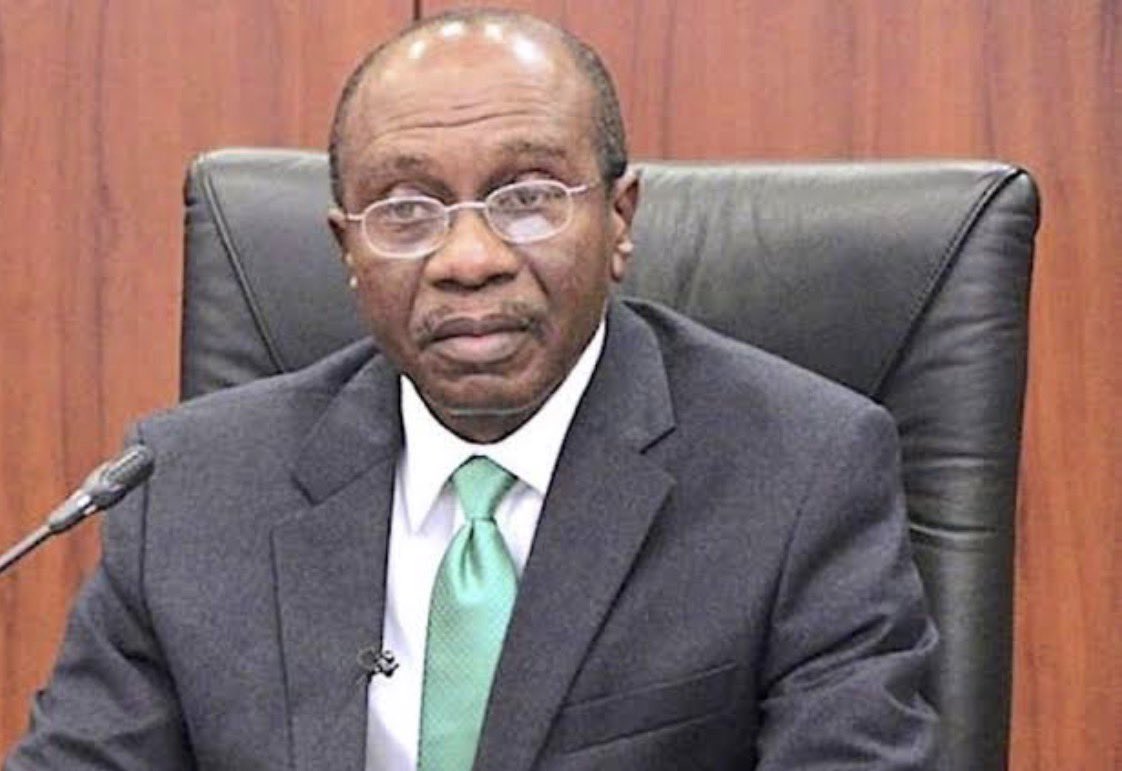
A prosecution witness in the ongoing trial of former Central Bank of Nigeria (CBN) Governor, Godwin Emefiele, has told the Federal Capital Territory High Court, Abuja, that the currency notes produced under the controversial naira redesign policy were different from the designs submitted to and approved by the President.
The witness, Commissioner of Police Eloho Okphebolo, who testified as Prosecution Witness 11 (PW11), said investigations revealed that although Emefiele had sought and obtained presidential approval for a particular currency redesign proposal, the notes eventually produced did not reflect the approved designs.
Okphebolo made the disclosure on Thursday, November 26, 2026, while testifying before Justice Maryanne Anineh of the FCT High Court, Maitama, Abuja, in the trial of the former CBN governor over alleged disobedience to lawful directives and other offences connected with the naira redesign exercise.
Led in evidence by prosecution counsel, Rotimi Oyedepo, SAN, Director of Public Prosecutions of the Federation, the police commissioner explained that the findings emerged from an investigation of the CBN conducted by a special investigative team constituted by the President and headed by Jim Obazee.
He told the court that the investigation did not uncover evidence that the CBN Board had met and authorised the change in the colours of the redesigned banknotes.
According to him, the team found no record of a board meeting or approval specifically authorising the colour changes that characterised the notes eventually circulated.
“We didn’t see any approval that the board met and approved the colour swap,” he told the court.
The witness further explained that documents recovered during the investigation showed that Emefiele had written to the President requesting approval for the redesign of the currency, attaching samples of the proposed notes for consideration.
However, he said the designs eventually produced departed from the proposal submitted to the President, describing the outcome as a colour swap rather than the redesign that had received presidential approval.
“In the investigation, we saw that Emefiele requested the President to approve the redesign of currency note and he attached a sample of the design that he wanted, which the President approved, but what was eventually done was not a redesign as was approved by the President but colour swap,” Okphebolo said.
When presented with a letter purportedly written by Emefiele to the President, the witness identified the document and confirmed that it was the letter recovered during the investigation.
He insisted that the presidential approval obtained by the former CBN governor did not correspond with the currency designs subsequently produced.
“My evidence before this court is that what was approved by the President was not what is being done,” he said.
The prosecution witness also drew the court’s attention to Exhibit J1, a letter written by the Chief Executive Officer of the Nigeria Security Printing and Minting Company (NSPMC) to the special investigator.
According to him, the correspondence showed that the printing company had raised concerns over the proposed currency designs after examining the sketches forwarded to it.
He said the company’s chief executive and directors identified inconsistencies involving the numbering system, QR codes and watermarks, prompting the NSPMC to advise against proceeding with the printing.
Further explaining the discrepancies, Okphebolo referred to the currency samples tendered as exhibits, stating that the proposed N1,000 note in Exhibit J2 contained a QR code, while the version approved for production by the defendant did not.
He added that the N500 note, marked Exhibit D2, and the N200 denomination equally lacked QR codes.
The witness maintained that the investigation did not establish any presidential approval for producing the redesigned notes without the QR codes contained in the original proposal.
He also clarified that the special investigative team was not yet in existence when the currency notes were printed.
Beyond the circumstances surrounding the redesign, Okphebolo told the court that the exercise triggered serious difficulties for Nigerians, particularly in accessing cash, resulting in disruptions that required police intervention in different parts of the country.
He said he was aware of efforts by the police to contain disturbances arising from the scarcity of the redesigned notes, as well as legal actions instituted by some state governors seeking to preserve the validity of the old banknotes.
The commissioner added that the hardship associated with the policy affected him personally.
On the financial transactions investigated by the team, the witness identified Exhibit K as an instruction allegedly issued by Emefiele directing the deduction of N124.86 billion from the Consolidated Revenue Fund (CRF).
He also identified Exhibit AJ, a letter from the Federal Ministry of Finance to the special investigator, which, according to him, indicated that the ministry had not approved the transaction.
Okphebolo further told the court that the investigation did not establish any National Assembly approval for the withdrawal of the money from the CRF.
During cross-examination by defence counsel, Olalekan Ojo, SAN, the witness disclosed that he was deployed to the special investigative team on September 6, 2023.
He also told the court that he had no direct interaction with Emefiele outside the investigation, explaining that he and the special investigator took the former CBN governor’s statement while he was being held at the Kuje Correctional Centre.
Justice Anineh subsequently adjourned the case till December 15, 2026, and February 9, 15 and 16, 2027, for continuation of trial.
Discover more from SAFARI XPRESS NEWS
Subscribe to get the latest posts sent to your email.






Leave a Reply