

By Adebola Muili
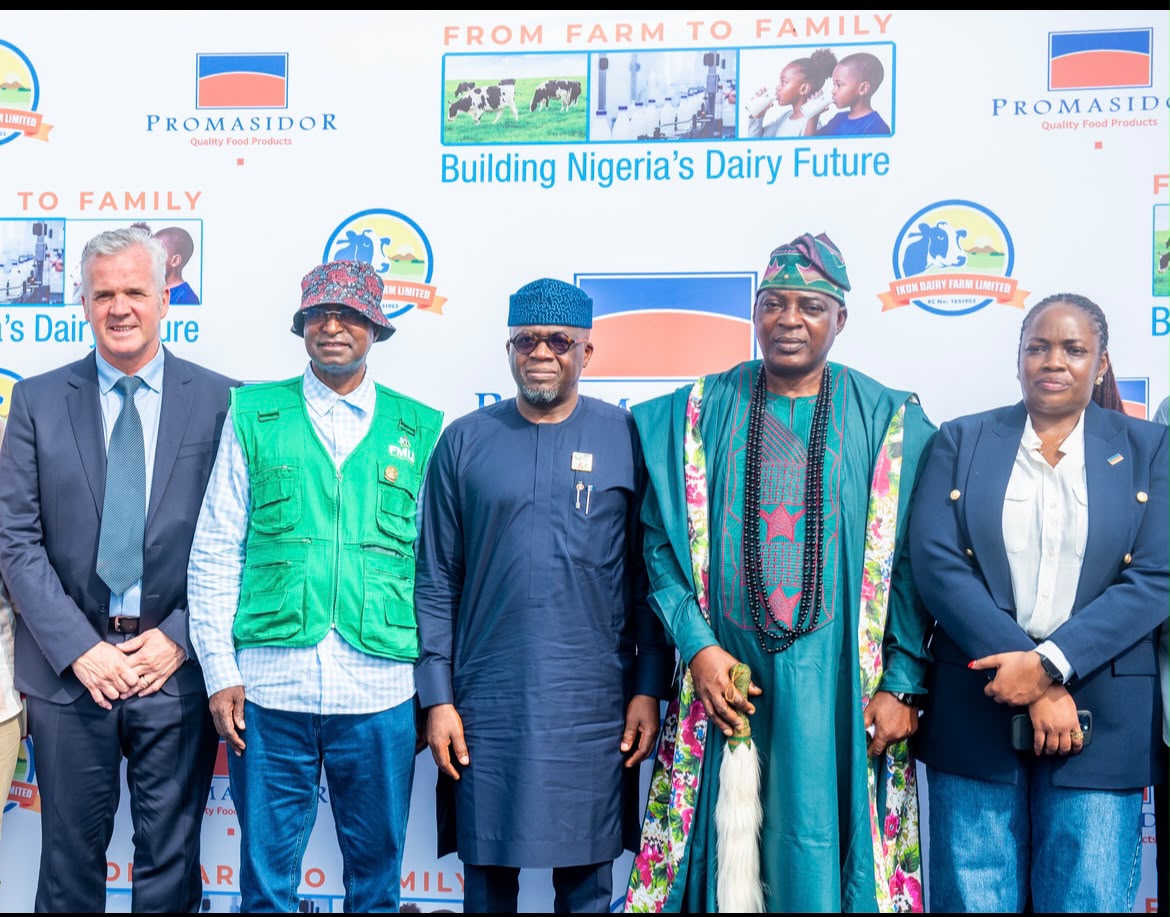
The Federal Government has commended Ikun Dairy Farm in Ekiti State for its contribution to local milk production and cattle breeding, describing the facility as a model for modern dairy farming capable of helping Nigeria reduce its dependence on imported dairy products.
The Minister of Livestock Development, Idi Mukhtar Maiha, gave the commendation during a visit to the farm on Wednesday, November 4, where he acknowledged its achievements in milk production, animal health management and the development of cattle breeds suited to local conditions.
Maiha, who noted that Nigeria spends approximately $1.5 billion annually on imported dairy products, stressed the need to strengthen domestic production through sustained investment, improved livestock management and collaboration between government and private-sector operators.
He expressed the Federal Government’s readiness to work with Promasidor Nigeria Limited and the Ekiti State Government to explore opportunities for expanding the facility and strengthening the country’s dairy value chain.

Located in Ikun-Ekiti, Moba Local Government Area of Ekiti State, the farm is operated by Promasidor in partnership with the state government and currently produces more than 6,000 litres of fresh milk daily.
The facility, which occupies over 530 hectares and accommodates more than 700 cattle, was originally established in the 1980s but remained underutilised for several years before the partnership with Promasidor was formalised in 2019, backed by an initial investment of $5 million from the company.
The farm has since emerged as a significant investment in Nigeria’s dairy industry, with its activities extending beyond milk production to cattle breeding, animal healthcare and the cultivation of feed crops.

Speaking during the ministerial visit, Promasidor’s Group Chief Financial Officer and Chairman of the Board of Ikun Dairy Farm Limited, Mr Yomi Adenson, disclosed that the facility had sold more than 160 pregnant heifers to farmers this year as part of efforts to improve access to quality dairy cattle and expand local production capacity.
He explained that the farm encountered significant challenges during its early years, particularly the loss of scores of imported cattle that struggled to adapt to the Nigerian environment.
According to him, sustained breeding efforts have, however, enabled the farm to develop successive generations of cattle better suited to local conditions, creating opportunities to strengthen the country’s dairy livestock population.
Adenson also highlighted the farm’s efforts to reduce dependence on external feed supplies through the production of some of its feed requirements, including maize and soybean, while maintaining investments in animal healthcare and improved dairy farming practices.

He said further development of the facility would require stronger collaboration with the Federal Ministry of Livestock Development and the Ekiti State Government to maximise its capacity and accelerate growth across the dairy value chain.
Representing the Ekiti State Governor, the Chief of Staff, Mr Oyeniyi Adebayo, reaffirmed the state government’s commitment to developing an integrated agricultural value chain that combines crop production with livestock development.
He also drew attention to the commissioning of a modern veterinary clinic as part of efforts to improve animal healthcare, strengthen disease management and enhance productivity in the livestock sector.
Beyond its agricultural and economic contributions, the Ikun partnership also supports the host community through its weekly Ikun Milk Day initiative, under which fresh milk is provided to primary school pupils.

The programme also exposes the children to modern dairy farming practices through educational activities, helping to build awareness of livestock production and the importance of the dairy industry from an early age.
The Headmistress of AUD CAC United, Mrs Margaret Owolabi, commended the initiative, saying it had generated excitement among pupils and positively affected the school, its teachers and the wider community.
Promasidor’s Chief Executive Officer, Mr Francois Gillet, described the development of a sustainable dairy industry as a long-term process requiring patience, technical expertise and consistent investment.
He said building local cattle breeding capacity, developing farmers and adapting livestock to Nigeria’s environment were gradual processes that demanded sustained commitment and cooperation among government, private investors and host communities.

According to the company, the farm currently employs more than 200 people directly and generates over 1,000 indirect jobs within its host and neighbouring communities.
Established in Nigeria in 1993, Promasidor manufactures and markets food and beverage products, including Cowbell, Loya, Miksi, Onga, Top Tea, Twisco and Kremela.
With Nigeria seeking to reduce its substantial dairy import bill, the experience of Ikun Dairy Farm highlights the importance of investment in local cattle breeding, animal healthcare, feed production and farmer development.
However, expanding domestic milk production to meet national demand will require further investments in processing facilities, cold-chain infrastructure, access to quality dairy cattle and support systems for local farmers.
The farm’s progress, therefore, presents an example of how sustained private-sector investment and government collaboration can contribute to strengthening Nigeria’s domestic dairy industry.
Discover more from SAFARI XPRESS NEWS
Subscribe to get the latest posts sent to your email.








Leave a Reply