

By Adebola Muili
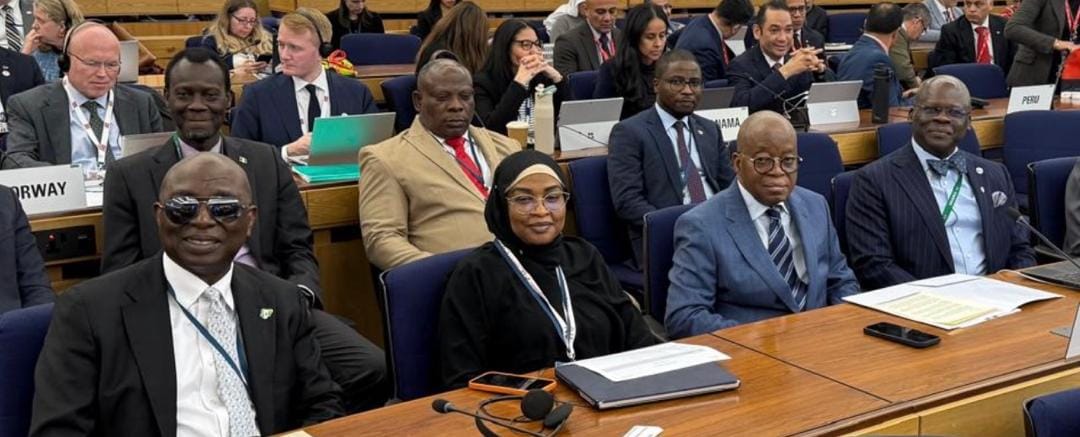
Minister of Marine and Blue Economy, Dr Adegboyega Oyetola, has called for stronger international cooperation to protect vital shipping routes, safeguard seafarers and strengthen maritime security, as Nigeria seeks a greater role in shaping global maritime policies.
Oyetola, who is leading a high-level Nigerian delegation to the 138th session of the International Maritime Organization (IMO) Council in London, said Nigeria remained committed to working with other maritime nations to address emerging security threats and promote safe, secure and sustainable international shipping.
The five-day Council session, which commenced on November 2 and ends on November 6, 2026, at the IMO headquarters in London, brings together member states to deliberate on critical issues affecting international shipping, maritime security and the future of the global maritime industry.

In a statement made available to journalists on Thursday, November 5, by his Special Adviser, Dr Bolaji Akinola, the minister said Nigeria’s participation was aimed at ensuring that the country’s interests were adequately represented while contributing meaningfully to efforts to address challenges confronting the global maritime sector.
“Nigeria recognises that the challenges confronting the global maritime industry require collective action, stronger international cooperation and effective regulatory frameworks. We are at the IMO Council to ensure that Nigeria’s interests are represented while contributing meaningfully to solutions that will strengthen maritime security, protect seafarers and promote sustainable shipping,” Oyetola said.
A major issue before the Council is the protection of vital international shipping routes, particularly amid growing security concerns and threats to commercial vessels operating in high-risk maritime zones.
Under Agenda Item 11, which specifically addresses the protection of vital shipping lanes, Nigeria is expected to draw on its experience in combating piracy and other maritime crimes in the Gulf of Guinea to support stronger international cooperation and coordinated security responses.
Oyetola said the country’s progress in improving maritime security had demonstrated the importance of political commitment, effective coordination and sustained collaboration among coastal states, international organisations and other maritime stakeholders.
“Our experience in the Gulf of Guinea has shown that maritime insecurity can be addressed through political commitment, effective coordination and cooperation among regional and international partners. Nigeria will continue to support initiatives that safeguard shipping routes and protect seafarers and maritime assets,” he said.
The welfare and protection of seafarers also feature prominently in the deliberations, following concerns raised by IMO Secretary-General, Arsenio Dominguez, over the use of seafarers as pawns in geopolitical disputes.
Nigeria is backing measures to prevent the arbitrary detention and abandonment of seafarers, while promoting their fair treatment, safe repatriation and mental well-being.
The minister stressed that seafarers remained indispensable to international trade and should not be exposed to unnecessary risks or have their rights compromised by geopolitical tensions.
“Seafarers are the lifeblood of international shipping. Their safety, dignity and welfare must never be compromised by geopolitical tensions. Nigeria supports stronger international measures to protect maritime workers and ensure that their rights are respected,” Oyetola said.
Beyond maritime security and seafarer welfare, the Council is also reviewing financial allocations for the 2026–2027 biennium and strategic priorities for 2028–2029.
The deliberations provide Nigeria with an opportunity to advocate greater technical cooperation and capacity-building support for developing maritime countries, particularly in strengthening their institutions and improving their participation in the global shipping industry.
Oyetola said Nigeria would continue to pursue international partnerships that would translate the IMO’s policies into practical benefits for developing maritime economies.
He noted that access to technical expertise, institutional support and investment opportunities was essential for developing countries seeking to build competitive and sustainable maritime industries.
Nigeria’s participation in the meeting is under its Category C membership of the 40-member IMO Council, through which it contributes to international maritime policy discussions and represents the interests of developing maritime nations.
The minister is accompanied by the Permanent Secretary of the Federal Ministry of Marine and Blue Economy, Mrs Fatima Mahmood; Director-General of the Nigerian Maritime Administration and Safety Agency (NIMASA), Dr Dayo Mobereola; Director of Maritime Services, Mr Oyinloye Adeola Meshack; and Nigeria’s Alternate Permanent Representative at the IMO, Mr William Bwala.
Discover more from SAFARI XPRESS NEWS
Subscribe to get the latest posts sent to your email.




Leave a Reply