

By Adebola Muili
The Senate has directed the National Agency for the Prohibition of Trafficking in Persons (NAPTIP) to investigate travel agencies suspected of facilitating the trafficking and exploitation of Nigerians in Libya, following growing concerns over the activities of migration intermediaries and the dangers confronting Nigerians seeking opportunities abroad.
The directive requires NAPTIP to lead a coordinated investigation involving the Nigeria Police Force, Nigeria Immigration Service, Economic and Financial Crimes Commission (EFCC) and the Ministry of Foreign Affairs.
The Senate adopted the recommendations contained in a joint committee report on the abuse of Nigerian migrants on Tuesday, October 27, 2026, directing the agencies to examine suspected recruitment networks, financial transactions and travel arrangements linked to trafficking operations.
The investigation is expected to establish whether travel agencies, their directors, employees or agents participated in recruiting, transporting or otherwise facilitating the exploitation of Nigerian migrants.
It will also involve tracing financial transactions and examining the relationships between suspected recruiters, travel intermediaries and trafficking networks operating along migration routes.
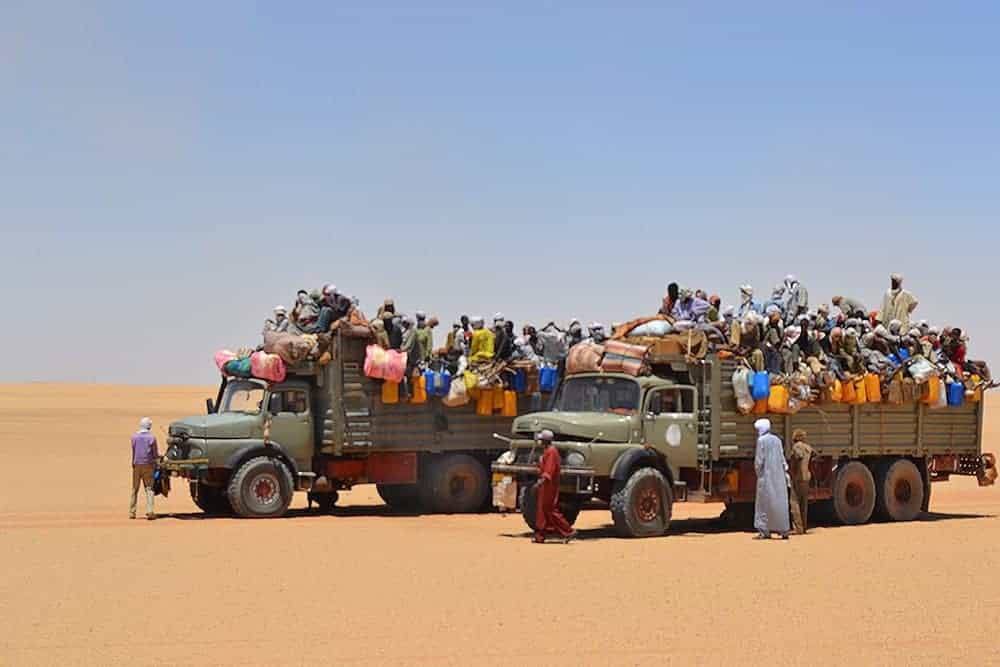
The Senate’s intervention comes about a month after the Foundation for Investigative Journalism (FIJ) published a three-part undercover investigation exposing the dangers confronting African migrants travelling through the Sahara Desert and Libya in attempts to reach Europe.
The investigation documented disturbing accounts of deaths, starvation, rape, physical assault, abduction, torture, psychological abuse and enslavement suffered by migrants along the routes.
FIJ founder, ‘Fisayo Soyombo, spent 47 days travelling along the migration corridor as part of the investigation, which began in Kano, Nigeria, and passed through Zinder, Agadez and Dirkou in Niger before continuing through al Gatrun and Sabha to Tripoli in Libya.

The undercover journey provided firsthand accounts of the conditions migrants encounter while navigating irregular migration routes, including the dangers associated with depending on networks that may expose them to exploitation and abuse.
The Senate’s decision to investigate suspected travel agencies now places the spotlight on the possible role of intermediaries operating within Nigeria, particularly those who may use promises of overseas opportunities to recruit unsuspecting migrants into dangerous arrangements.
However, the directive does not establish criminal responsibility against any particular travel agency or individual. Such responsibility will depend on the findings of the investigation and evidence that can be established under the law.
Beyond the proposed investigation, the Senate called for stronger enforcement of the Trafficking in Persons (Prohibition) Enforcement and Administration Act, 2015, and the Child Rights Act, 2003, as part of efforts to strengthen Nigeria’s response to human trafficking.
It also urged the Federal Government to increase funding for NAPTIP and other relevant agencies to improve their capacity to investigate trafficking networks, prosecute offenders and provide necessary support for victims.
The call for increased funding comes amid the challenges associated with investigating trafficking operations that often extend beyond Nigeria’s borders and involve multiple individuals and networks.
Lawmakers also recommended the establishment of a national protection and reintegration programme for Nigerians rescued from trafficking.
Under the proposed arrangement, the National Commission for Refugees, Migrants and Internally Displaced Persons is expected to coordinate the programme in collaboration with NAPTIP.

The initiative is intended to provide a more coordinated response to the needs of returning migrants, many of whom may have suffered physical injuries, psychological trauma, financial losses and other forms of hardship during their ordeal.
The Senate further called for stronger diplomatic engagement with Libyan authorities to improve cooperation in combating trafficking, facilitate the return of victims and promote safe and legal migration routes.
Such cooperation is considered important because trafficking networks operating along the Sahara and through Libya may involve recruiters, transporters and other criminal elements operating across several countries.
For Nigerians seeking employment, education and better economic opportunities abroad, the proposed investigation could help expose deceptive recruitment arrangements and distinguish legitimate travel services from operators who exploit vulnerable people.
It could also provide an opportunity for authorities to identify the networks behind the exploitation of migrants, trace the financial benefits derived from trafficking and pursue those found to have violated the law.
However, the effectiveness of the Senate’s recommendations will depend on the willingness and capacity of the relevant agencies to move beyond investigations on paper and deliver measurable results.
In addition to identifying suspects and pursuing prosecutions where evidence justifies them, authorities will need to strengthen public awareness about the risks associated with irregular migration and misleading overseas employment offers.
Families of Nigerians who have lost contact with relatives travelling through Libya also stand to benefit from a more coordinated system for identifying victims, tracing trafficking networks and providing assistance to survivors.
The proposed reintegration programme, if properly implemented and funded, could help returning migrants access medical attention, counselling, legal assistance and livelihood support, reducing their vulnerability to further exploitation.
For the travel industry, a credible investigation could also help distinguish legitimate operators from those involved in deceptive recruitment and trafficking activities, while protecting public confidence in lawful travel services.
The immediate responsibility now rests with NAPTIP and the other agencies to establish the extent of the suspected activities, identify those involved where evidence exists and ensure that offenders are brought to justice.
The Federal Government will also be expected to address the Senate’s recommendations on funding, victim protection and diplomatic cooperation with Libya, while lawmakers exercise oversight to ensure that the proposed measures translate into practical action.
Discover more from SAFARI XPRESS NEWS
Subscribe to get the latest posts sent to your email.







Leave a Reply