

By Adebola Muili
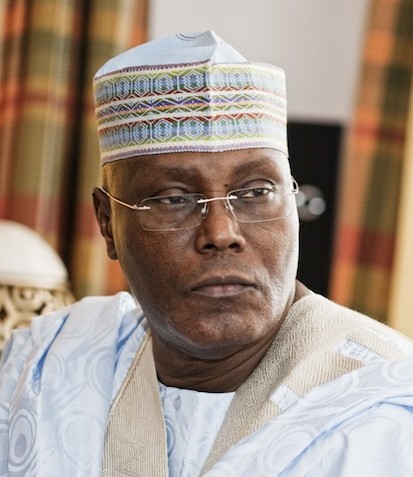
The Federal Government has accused former Vice-President Atiku Abubakar of policy somersault over his proposal to restore a “targeted subsidy” on petrol if elected president in 2027.
The government said the former vice-president had offered three different explanations of his proposed subsidy policy within one week, describing the development as evidence of inconsistency and lack of clarity.
In a statement issued on Wednesday, August 26, 2026, the Special Adviser to the President on Information and Strategy, Bayo Onanuga, said Atiku’s spokesperson, Paul Ibe, initially announced that the former vice-president would restore petrol subsidy if elected and later phase it out.
According to Onanuga, Ibe had presented the proposed subsidy as a temporary intervention to enable Nigerians and businesses to recover before its eventual removal.
He said another senior aide to Atiku, Phrank Shaibu, subsequently described Ibe’s position as an “unauthorised and misleading characterisation” of Atiku’s policy.
Shaibu, he added, said Atiku would not set a predetermined date for ending the subsidy, but would retain it until domestic refining expanded, supply stabilised and competition deepened enough to deliver affordable prices without government support.
Onanuga said Atiku himself, however, intervened hours later, insisting that his position “has not changed” and declaring, “I will restore targeted subsidy and put purchasing power back in the hands of Nigerians.”
The presidential aide described the conflicting positions as a serious policy contradiction, asking why Atiku’s aides would offer different explanations if the former vice-president’s position had remained unchanged.
He said Nigerians deserved clarity on how the proposed subsidy would operate, including its cost, beneficiaries, funding mechanism and the conditions that would determine its eventual termination.
Onanuga also challenged Atiku’s argument that subsidy and increased competition would make petrol cheaper, saying pump prices were influenced by several factors, including international crude oil prices, exchange rates, refining costs, transportation and distribution expenses.
He argued that competition could improve efficiency but could not shield Nigeria from movements in global crude oil prices or other production costs.
The presidential aide also faulted the suggestion that petrol prices were solely responsible for Nigeria’s food inflation, noting that agricultural productivity, insecurity, exchange rates, logistics, storage, flooding, input costs, money supply and supply constraints also contributed to rising food prices.
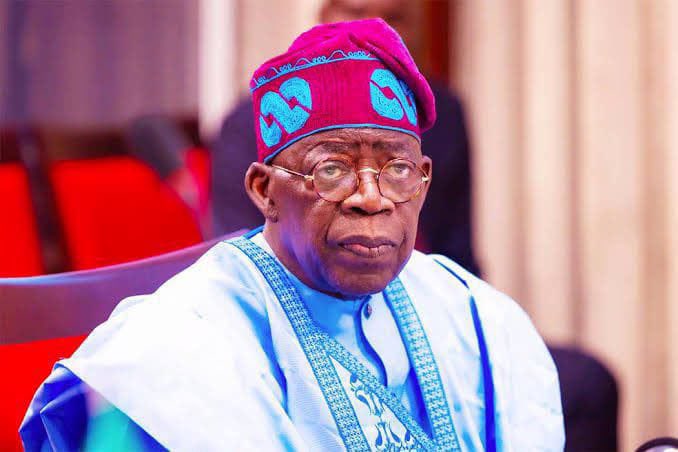
He said the administration of President Bola Ahmed Tinubu had been addressing these challenges through its economic reforms.
Onanuga further questioned Atiku’s proposal to tie the subsidy to the price of crude oil, pointing out that a barrel of crude produces several petroleum products besides petrol.
“Atiku says his subsidy will follow the barrel of crude,” he said, questioning whether the former vice-president intended to subsidise all the products derived from the same barrel.
He said petrol accounts for about 45 per cent of the products obtained from a refined barrel of crude, while diesel accounts for roughly 25 per cent and jet fuel and kerosene about nine per cent.
Other products, he said, include base ingredients for synthetic rubber, nylon, polyester and plastics, asphalt, hydrocarbon gas liquids, lubricants, waxes, petroleum coke and sulphur.
Onanuga therefore questioned whether Atiku would also subsidise diesel and kerosene, given their importance to households, businesses, transport operators and industries.
He also questioned whether refineries supplied with discounted crude would be allowed to profit from the remaining products while government subsidy was focused on petrol.
The presidential aide recalled that the administration of former President Olusegun Obasanjo, in which Atiku served as vice-president, deregulated diesel in 2004, while kerosene and jet fuel were deregulated in subsequent years.
He urged Atiku to provide Nigerians with what he described as a coherent, costed and workable petroleum policy rather than an “opaque and potentially costly subsidy regime dressed up in new language.”
“The economy is too serious for policy somersaults, incoherence, destructive populism and election gimmicks,” Onanuga said.
Discover more from SAFARI XPRESS NEWS
Subscribe to get the latest posts sent to your email.



Leave a Reply