

By Adebola Isimijola, Lagos
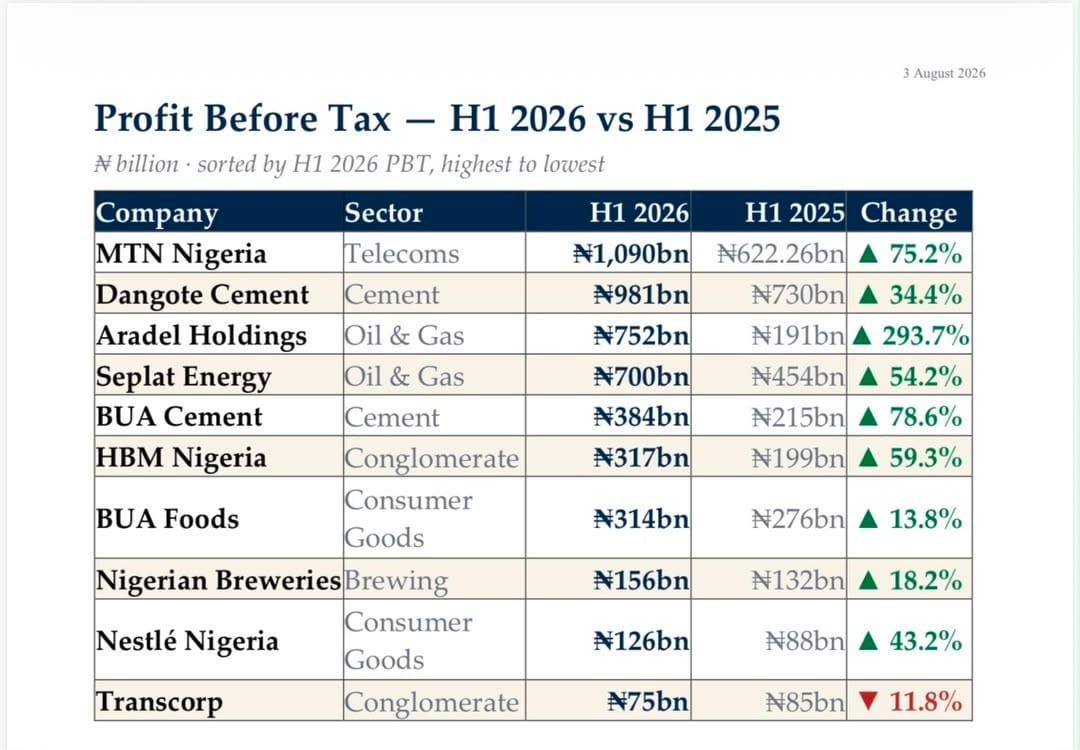
The Presidency on Wednesday said the robust financial performance posted by many companies listed on the Nigerian Exchange (NGX) in the first half of 2026 was driven by the economic reforms introduced by President Bola Ahmed Tinubu’s administration, particularly the unification of the foreign exchange market, removal of petrol subsidy and other fiscal and monetary measures.
It said the reforms had improved investor confidence, strengthened macroeconomic stability, enhanced access to foreign exchange and created a more predictable business environment, leading to higher revenues and stronger earnings for several major Nigerian companies.
The position was contained in a statement issued by the Special Adviser to the President on Information and Strategy, Mr. Bayo Onanuga, on Wednesday.
According to the Presidency, the unification of the foreign exchange market enabled companies with significant foreign currency exposure to properly reflect the value of their dollar-denominated earnings, while export-oriented firms such as Aradel Holdings and Seplat Energy recorded stronger financial performance due to improved market conditions.
It noted that the Federal Government also boosted confidence in the oil and gas sector through the approval of major upstream transactions, including the Renaissance Africa Energy consortium’s acquisition of Shell Petroleum Development Company (SPDC) assets and Seplat Energy’s acquisition of Mobil Producing Nigeria Unlimited (MPNU) assets.
The statement added that President Tinubu’s approval of naira payment for crude oil had strengthened domestic refining, with the Dangote Refinery now emerging as a net exporter of Premium Motor Spirit (PMS) and aviation fuel.
It further stated that manufacturing companies, including Dangote Cement, BUA Cement and HBM, benefited from improved access to foreign exchange, enabling them to procure imported inputs more efficiently, increase production and improve profitability.
Onanuga also said the removal of petrol subsidy strengthened government finances, providing greater fiscal space for infrastructure development, while banking sector recapitalisation, tighter monetary management and ongoing tax reforms had further improved the business environment.
According to him, “Taken together, these reforms have enhanced the operating environment for capital-intensive and export-oriented firms by improving market efficiency, strengthening macroeconomic stability, increasing investor confidence, and facilitating more efficient capital allocation.”
He maintained that the impressive financial results recorded by many listed companies reflected the positive impact of the Tinubu administration’s structural reforms rather than isolated corporate achievements, stressing that the policies had strengthened market fundamentals and positioned businesses for sustainable long-term growth.
Discover more from SAFARI XPRESS NEWS
Subscribe to get the latest posts sent to your email.











Leave a Reply