

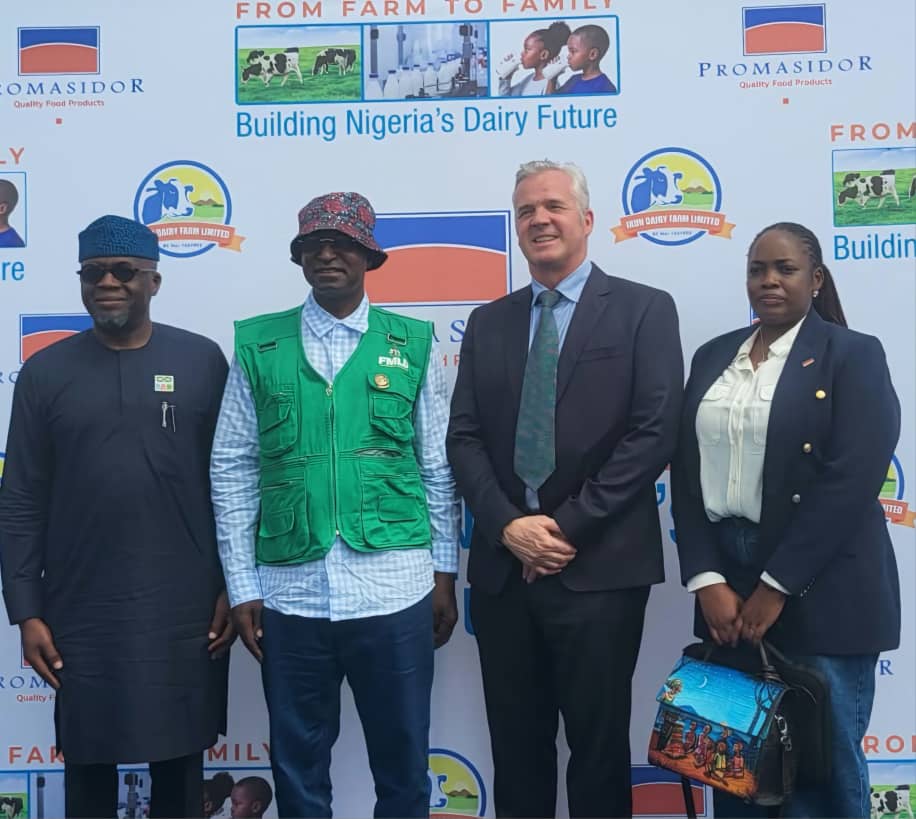
Minister hails Promasidor-Ekiti partnership as Nigeria spends $1.5bn annually on dairy imports
By Adebola Muili
Nigeria’s drive to reduce its dependence on imported dairy products is receiving a boost as Ikun Dairy Farm in Ekiti State records daily milk production of more than 6,000 litres and expands local cattle breeding, with over 160 pregnant heifers sold to farmers this year.
The development highlights the growing contribution of domestic investment to the livestock industry, particularly efforts to improve local milk production, strengthen cattle breeding and reduce dependence on imported dairy products and breeding stock.
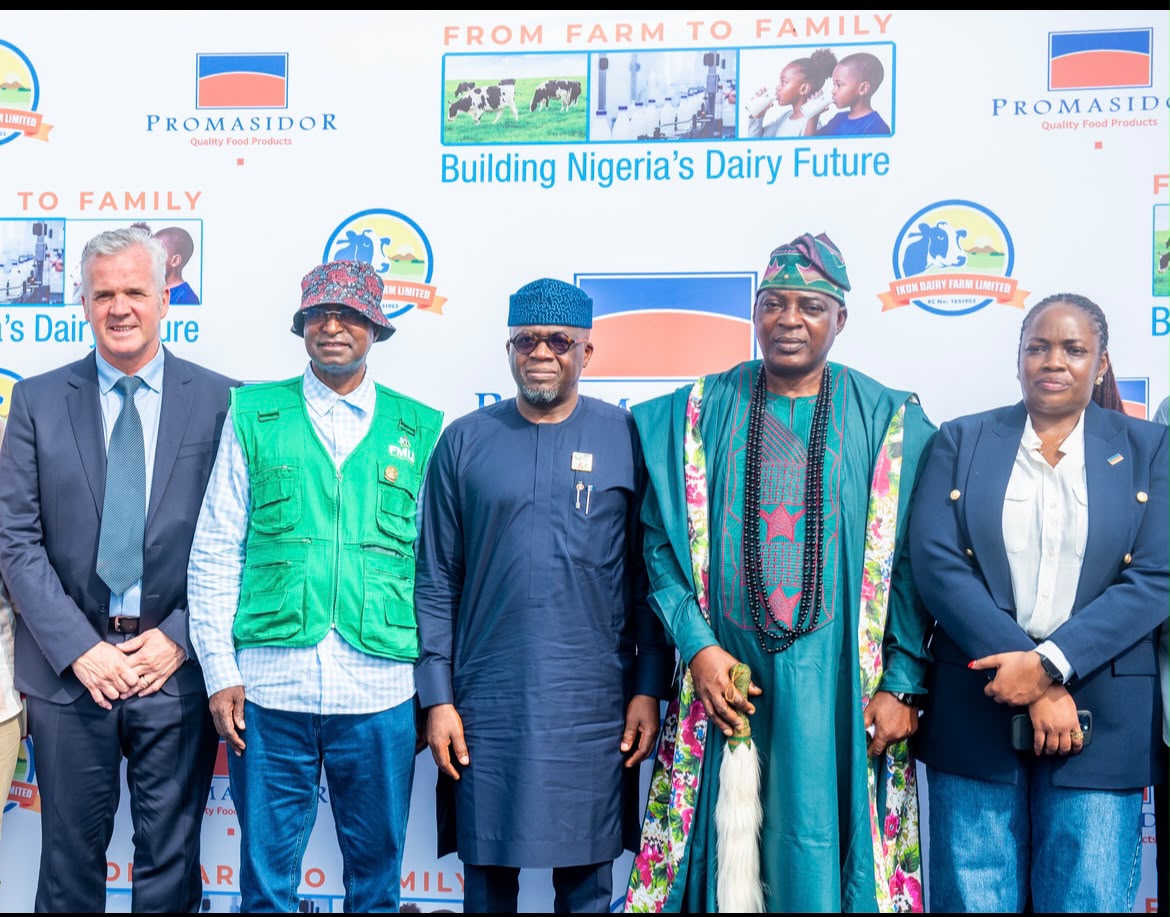
The Minister of Livestock Development, Idi Mukhtar Maiha, commended the progress at the farm during a working visit on Wednesday, November 4, 2026, describing its achievements in cattle breeding, animal healthcare and milk production as important contributions to the Federal Government’s efforts to strengthen Nigeria’s livestock sector.

Maiha drew attention to Nigeria’s estimated annual expenditure of about $1.5 billion on dairy imports, stressing the need to develop domestic production capacity and reduce the country’s exposure to international supply pressures.
The farm, operated by Promasidor Nigeria Limited in partnership with the Ekiti State Government, has become an example of how public-private collaboration can support investment in agricultural production and livestock development.
Established in 1983, Ikun Dairy Farm remained underutilised for several years before Promasidor and the Ekiti State Government formalised a partnership in 2019 to revive the facility and expand its operations.
With an initial investment of $5 million by Promasidor, the farm has grown into an integrated agricultural operation covering more than 500 hectares, housing over 700 cattle and producing more than 6,000 litres of fresh milk daily.
Beyond its milk production capacity, the farm is making progress in local cattle breeding, with its Group Finance Director and Chairman, Mr Yomi Adexson, disclosing that more than 160 pregnant heifers were sold to farmers this year to support the development of dairy farming beyond the facility.
The sale of the pregnant heifers represents an important aspect of the farm’s contribution to the livestock sector, as it provides other farmers with opportunities to expand their herds and participate in commercial milk production.
Adexson, however, acknowledged that the farm’s development had not been without significant challenges, particularly during its early operations when approximately 185 imported cattle died after experiencing difficulties adapting to local environmental conditions.
He explained that sustained investment in breeding and animal management had subsequently enabled the farm to develop successive generations of cattle better suited to Nigeria’s environment.
The experience, he said, underscored the importance of developing locally adapted cattle breeds rather than relying solely on imported animals that may struggle with the country’s climatic and environmental conditions.
The farm has also incorporated crop production into its operations, cultivating maize, soybean and cassava to support animal feed requirements. This integrated approach is intended to strengthen feed availability, improve livestock management and support more sustainable milk production.
Promasidor’s Chief Executive Officer, Mr Francois Gillet, emphasised that building a sustainable dairy industry required long-term commitment, technical expertise, consistent investment and effective collaboration among stakeholders.
He identified local breeding capacity, farmer development and adaptation to environmental conditions as essential elements in establishing a productive and resilient dairy industry.
Representing the Ekiti State Governor during the minister’s visit, the state’s Chief of Staff, Mr Oyeniyi Adebayo, reaffirmed the government’s commitment to developing an integrated agricultural value chain linking crop production with livestock development.
Adebayo also highlighted the commissioning of a modern veterinary clinic to strengthen animal healthcare and improve livestock productivity across the state.
The facility is expected to provide improved veterinary services and support better animal health management, which are essential to maintaining milk production and developing a sustainable cattle-breeding programme.
Beyond agricultural production, the investment is also contributing to the local economy, providing more than 200 direct jobs and supporting over 1,000 indirect employment opportunities, according to the company.
Its community development efforts include the weekly Ikun Milk Day programme, through which fresh milk is distributed to primary school pupils in the host community.
The initiative has received appreciation from local school authorities, who acknowledged its contribution to pupils and the wider community.
As Nigeria continues to explore ways of reducing its dependence on imported dairy products, the experience at Ikun Dairy Farm highlights the importance of sustained investment in local milk production, cattle breeding, animal healthcare and agricultural infrastructure.
However, achieving national dairy self-sufficiency will require more than increased farm production. Investments in milk processing, cold-chain facilities, feed development and support for smallholder dairy farmers will also be necessary to build a competitive domestic industry.
The Ikun project therefore offers an example of the potential of public-private partnerships in developing Nigeria’s livestock sector, while creating employment, strengthening local agricultural capacity and contributing to food security.
Discover more from SAFARI XPRESS NEWS
Subscribe to get the latest posts sent to your email.









Leave a Reply