

By Adebola Muili
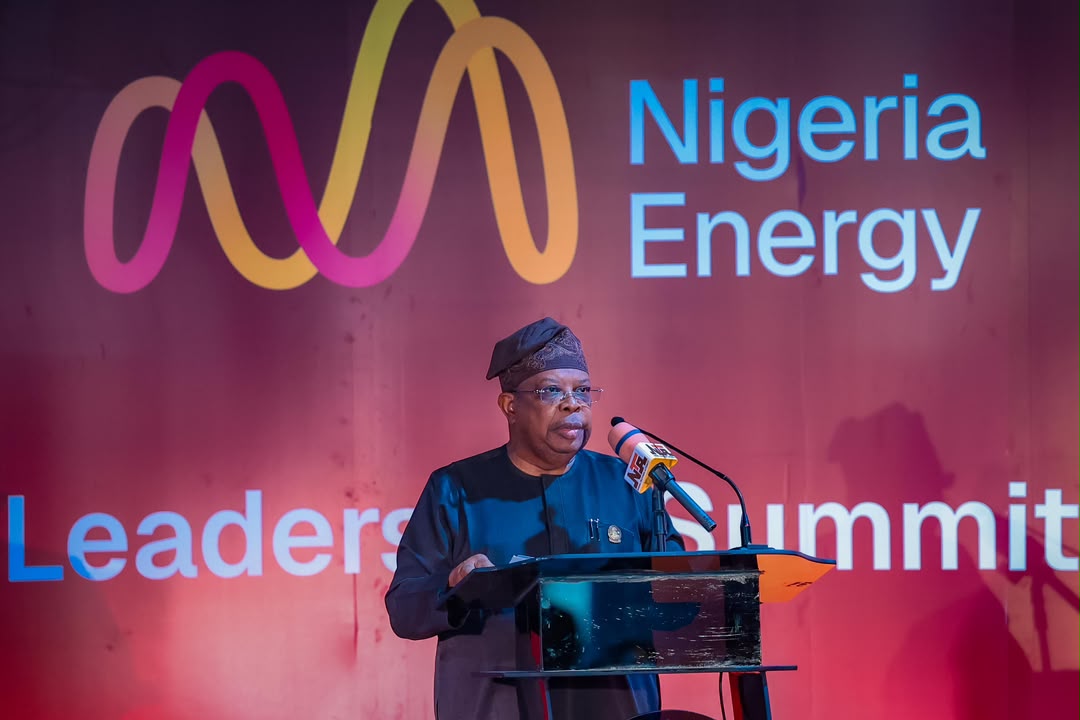
The Minister of Power, Joseph Tegbe, has unveiled a roadmap to stabilise Nigeria’s electricity grid, strengthen transmission infrastructure and improve power delivery, identifying gas supply constraints, overstretched transmission networks, distribution losses and accumulated financial liabilities as major challenges confronting the sector.
Tegbe disclosed this at the opening of the Nigeria Energy Leadership Summit 2026 at the Landmark Centre, Lagos, where he emphasised the need to move beyond policy formulation to the effective implementation of reforms that would deliver measurable improvements in electricity supply and strengthen the sustainability of the power market.
The minister also disclosed that the Federal Government had paid N1.23 trillion out of an estimated N3.3 trillion in legacy liabilities in the power sector, while taking steps to block financial leakages and prevent the accumulation of fresh obligations.
He said the government’s strategy was focused on four cardinal priorities: developing strategic energy zones, strengthening the financial sustainability of the sector, optimising existing power assets and expanding infrastructure to accommodate future electricity demand.
According to him, the priorities are designed to address persistent challenges across the generation, transmission and distribution segments of the electricity value chain, ensuring that investments in the sector translate into improved power supply for households, businesses and industries.
Tegbe identified three priority economic energy corridors under the proposed strategy: Lagos–Ogun, Benin–Enugu–Port Harcourt, and Abuja–Kaduna–Kano.

He explained that the approach would improve coordination among electricity generation facilities, transmission infrastructure and distribution networks, while ensuring that power supply is aligned with the needs of economic centres with identifiable demand.
The minister said the development of these corridors was intended to address infrastructure bottlenecks and improve electricity delivery in areas where reliable power supply was essential for industrial production, commercial activities and economic growth.
He stressed that improving the performance of the electricity market required more than expanding generation capacity, noting the importance of ensuring that transmission and distribution infrastructure could adequately deliver available electricity to end users.
The minister identified gas supply constraints, overstretched transmission infrastructure, distribution losses and accumulated sector liabilities as some of the major issues requiring coordinated action by stakeholders across the power industry.
He said the government was working towards resolving these challenges through infrastructure development, improved coordination and measures aimed at strengthening the financial position of the electricity market.

On the sector’s financial challenges, Tegbe said the government had paid N1.23 trillion from the estimated N3.3 trillion in legacy liabilities.
He added that measures were being taken to block financial leakages and prevent new liabilities from accumulating, as part of efforts to improve the sector’s financial sustainability.
The minister also highlighted ongoing initiatives to reduce technical and commercial losses, including the continued implementation of the Presidential Metering Initiative (PMI), the Distribution Sector Recovery Programme (DSRP) and the Meter Acquisition Fund (MAF).
These initiatives are intended to improve metering, strengthen revenue collection and address inefficiencies that contribute to financial losses within the distribution segment of the electricity market.
Tegbe further emphasised the need to optimise existing power-sector assets, noting that improving the performance of available infrastructure must go hand in hand with investments in new facilities to meet the country’s growing electricity needs.
He said the government’s reform agenda must ultimately produce tangible benefits for Nigerians by improving electricity supply, supporting industrial productivity, encouraging business expansion and attracting investments capable of creating jobs.
The minister added that the reforms were aligned with President Bola Ahmed Tinubu’s Renewed Hope Agenda, with the broader objective of strengthening the power sector’s contribution to national economic development.
The Nigeria Energy Leadership Summit and Exhibition 2026, themed “Strengthening Power Delivery Through Execution, Coordination and Performance,” runs from October 27 to 29.
The summit brings together energy companies, technology providers and other industry stakeholders to showcase innovations, discuss challenges affecting the sector and explore investment opportunities across the power and wider energy value chain.
Discover more from SAFARI XPRESS NEWS
Subscribe to get the latest posts sent to your email.







Leave a Reply