

By Adebola Muili
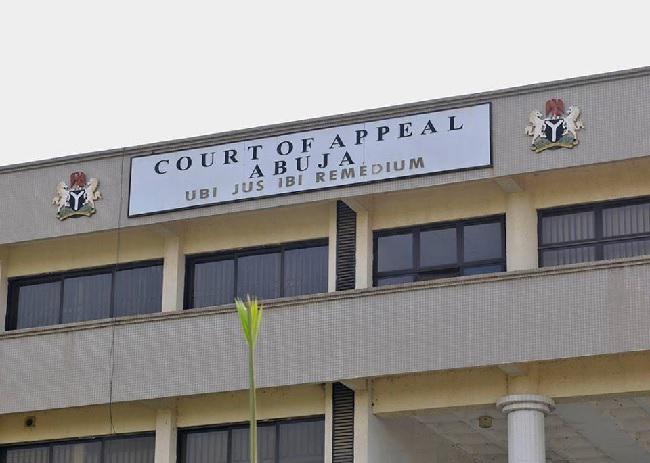
The Court of Appeal, Abuja Division, has set aside the liability imposed on Fidelity Bank Plc by the Federal Capital Territory High Court in a fundamental rights case involving Michael Kundera.
A three-member panel led by Justice Adebukola Banjoko delivered the judgment on September 14, 2026, allowing Fidelity Bank’s appeal and overturning the lower court’s finding against the bank.
The case arose from suit No. CV/6258/23, filed by Kundera to enforce his fundamental rights following his arrest and detention between May 15 and 16, 2023. He had alleged that he was detained without being charged before a court or granted administrative bail.
The respondents included the Economic and Financial Crimes Commission (EFCC), former EFCC Chairman, Abdulrasheed Bawa, an EFCC officer identified as Calistus, and Fidelity Bank Plc.
In its judgment delivered in April 2024, the FCT High Court, presided over by Justice Peter Kekemeke, held that Kundera’s arrest and detention were unlawful and amounted to a violation of his fundamental rights.
The court consequently ordered the respondents, jointly or severally, to pay Kundera ₦10 million in damages for the violation, in addition to ₦2 million awarded as costs of the action.
The trial court also noted that Kundera, who was reported to be 75 years old at the time, ought not to have been subjected to such treatment. It further held that continued invitations and threats against him over a matter that had already been decided went beyond the lawful bounds of the respondents.
Kundera, through his counsel, O. Orji, had linked the dispute to a parcel of land at the Foreign Affairs Quarters, which he claimed belonged to him. He also argued that the matter was already pending before the Court of Appeal in suit No. CA/ABJ/CV/533/2021.
Among the reliefs sought by Kundera were declarations that his arrest and detention violated rights guaranteed under Sections 35 and 36 of the 1999 Constitution, an order restraining further invitations or threats of arrest, and ₦500 million in exemplary or aggravated damages.
However, Fidelity Bank challenged the High Court judgment, arguing that there was no credible evidence linking it to Kundera’s arrest, detention or the alleged violation of his constitutional rights.
The bank told the appellate court that its involvement was limited to a petition submitted to the EFCC over allegations of criminal conduct involving legal entities that had obtained a ₦100 million loan procurement order for a specific project but allegedly diverted the funds for personal use.
Fidelity Bank maintained that Kundera was not the subject of the petition and argued that there was therefore no basis for holding the bank responsible for any alleged violation of his rights.
The bank consequently asked the Court of Appeal to determine whether the trial court was right to grant reliefs against it without sufficient evidence establishing its involvement in the alleged infringement.
In its judgment, the Court of Appeal upheld Fidelity Bank’s position, finding that there was no credible evidence before the trial court establishing that the bank had infringed Kundera’s fundamental rights.
The appellate panel further held that Kundera had failed to discharge the burden of proof required to establish wrongdoing against Fidelity Bank and justify the reliefs granted against it.
The Court of Appeal consequently reversed the finding of liability against Fidelity Bank, effectively clearing the bank of responsibility for the alleged infringement of Kundera’s fundamental rights.
Discover more from SAFARI XPRESS NEWS
Subscribe to get the latest posts sent to your email.













Leave a Reply